Giant star marking in Varginha roundabout sparks social media buzz, DeMolay explains origin
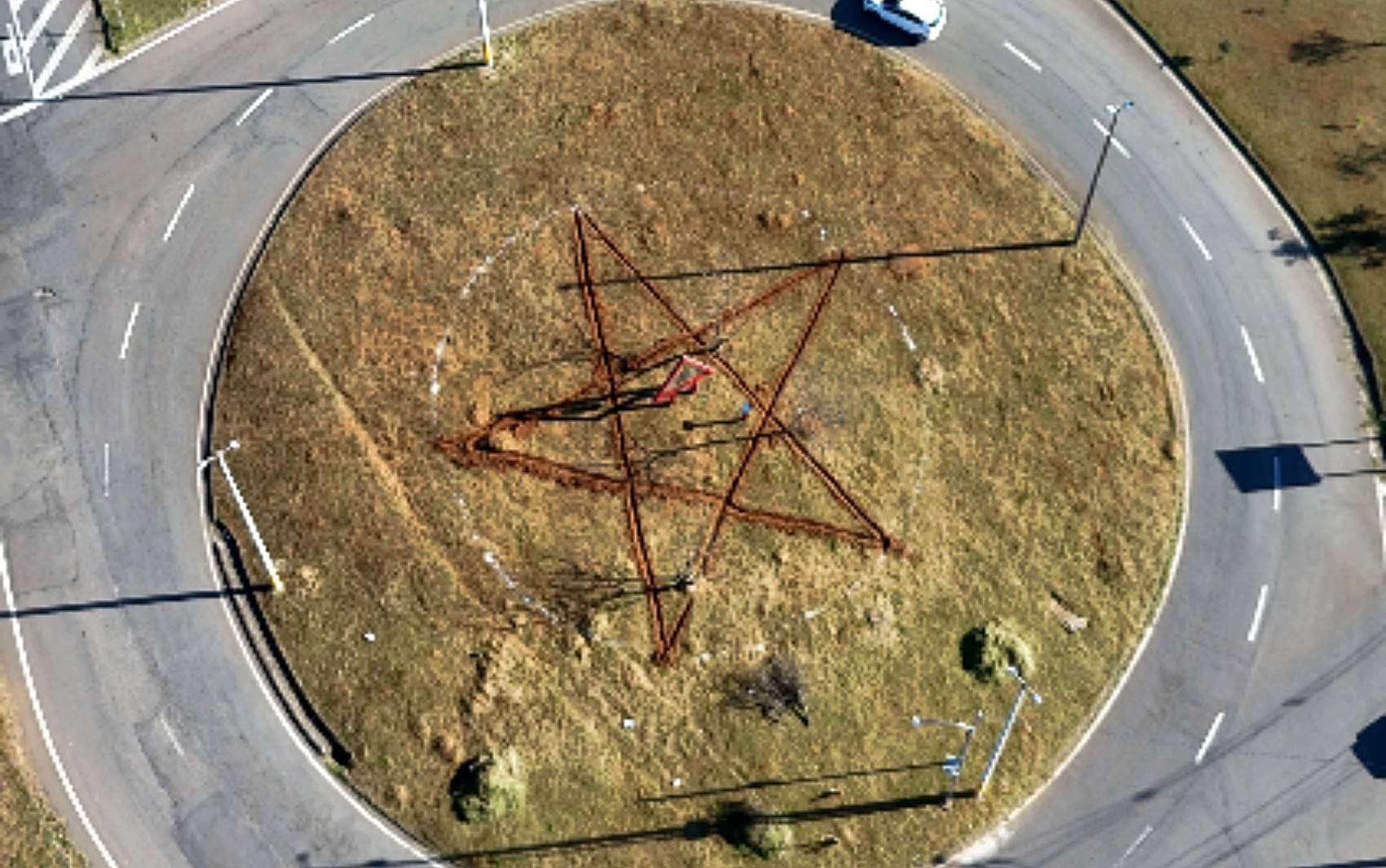
A large star-shaped marking on a roundabout in Varginha, Minas Gerais, Brazil, has recently gone viral on social media, sparking widespread curiosity and numerous theories among residents. The design, situated at the intersection of Alameda Otávio Marques de Paiva and Avenida Humberto Pizzo, led to speculation ranging from extraterrestrial activity and artificial intelligence to marketing stunts and vandalism. However, the explanation provided by the Ordem DeMolay reveals a more grounded purpose. The organization, which has been responsible for maintaining the public square since 2017, confirmed that the marking is part of a new landscaping project set to be completed this July. According to Cléber Orígenes, president of the advisory council for the Princesa do Sul Chapter, the DeMolay chapter adopted the space through a municipal program allowing businesses and institutions to care for public areas. This initiative aims to revitalize the existing space, which already features a DeMolay monument, by creating a five-pointed star that will eventually be filled with flowers and vegetation. Vinícius Bahia, master councilor of the Ordem DeMolay, explained that the project was planned about a year ago but the marking was only recently completed. The star symbol is integral to the Ordem DeMolay's official emblem and represents values such as hope, commitment, and companionship. The organization, founded in the United States in 1919 by Freemason Frank Sherman Land, is a youth organization supported by Freemasonry, focusing on leadership development and personal growth for members typically aged 12 to 21. Before the official clarification, the marking fueled online discussions, with many users referencing Varginha's famous UFO incident, pop culture references, and various other creative explanations. The adoption of public spaces in Varginha is a municipal program regulated by law, allowing authorized entities to undertake maintenance, landscaping, and improvements after formalizing agreements with the city's Secretariat of Tourism and Commerce.
The viral spread of the star marking in Varginha highlights how public space design, when uncommented upon, can become a canvas for collective imagination and speculation, amplified by social media. This phenomenon underscores the power of visual symbols and the human tendency to seek patterns and explanations, especially in areas with existing cultural narratives, such as Varginha's UFO lore. The Ordem DeMolay's initiative, while rooted in civic engagement and beautification, inadvertently tapped into this speculative ecosystem. Moving forward, organizations undertaking public art or landscaping projects could proactively engage with local communities to frame their intentions, thereby mitigating the potential for misinterpretation and fostering a more direct connection between the project and its audience. This approach aligns with principles of transparent governance and community-building in the digital age, where information, or the lack thereof, travels at unprecedented speeds.
AI-generated to prompt reflection — not editorial opinion, not advice, not a statement of fact. How this works.