Giant Tambaqui Fish Weighing 50kg Draws Attention in Amazonian Fair
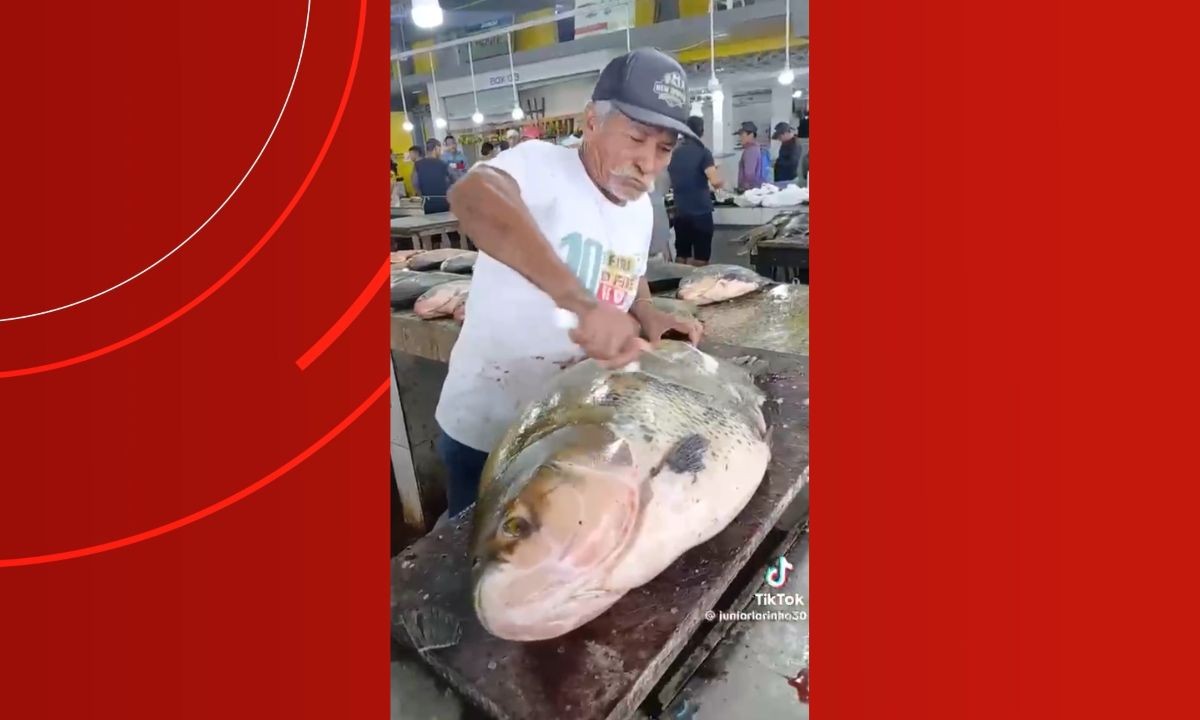
A video of a massive 50-kilogram tambaqui fish being prepared at a market in Coari, Amazonas, has gone viral, amassing over 1.4 million views. The fish, a symbol of Amazonian cuisine typically weighing 4-6 kilograms, was handled by local vendor Raimundo "Bigode," who has fished for 40 years. Influencer Silvio Junior Rodrigues captured the footage, highlighting the rarity of such a large specimen in urban centers like Manaus, though he notes they are still found in the region.
According to biologist Endiberg Oliveira, tambaqui over 30 kilograms are rare, with historical records of specimens reaching 50 kilograms, one of which is preserved at the National Institute of Amazonian Research (Inpa) and was caught over 40 years ago. Oliveira suggests that increased sightings of large tambaqui could be due to a combination of factors, including longer lifespans, food availability, and changes in fishing practices over the past five decades. He also points to a significant reduction in fishing pressure on tambaqui since the 1970s, when it constituted about 70% of the Amazon's fish catch; it now represents only around 5%, with other species dominating the market.
This shift, coupled with the growth of aquaculture, may be aiding the recovery of natural tambaqui stocks. The consumption of younger, farmed tambaqui has lessened pressure on wild populations, potentially allowing some fish to live longer and grow larger. While this suggests a possible recovery, Oliveira emphasizes that more research is needed to determine if these giant specimens represent a general trend or isolated incidents amplified by social media. He contrasts this with other species like jaraqui, whose market sizes have decreased due to fishing pressure, suggesting the tambaqui's situation might be a reversal driven by fishing regulations and aquaculture.
The viral phenomenon of an exceptionally large tambaqui fish highlights the complex interplay between ecological recovery, market dynamics, and social media visibility. While the increased size of individual fish may indicate a positive ecological response to reduced fishing pressure and shifts in species dominance since the 1970s, it is crucial to distinguish between localized success stories and a generalized population trend. The growth of aquaculture, while potentially alleviating pressure on wild stocks, also introduces its own set of environmental considerations. Future research should focus on population genetics and long-term ecological monitoring to ascertain whether these large specimens signify a sustainable recovery of natural tambaqui populations or merely anecdotal evidence amplified by digital platforms. Understanding these dynamics is key to developing effective conservation and management strategies for Amazonian fisheries in the coming decade.
AI-generated to prompt reflection — not editorial opinion, not advice, not a statement of fact. How this works.