Gilgit-Baltistan Assembly Seeks Provisional Provincial Status
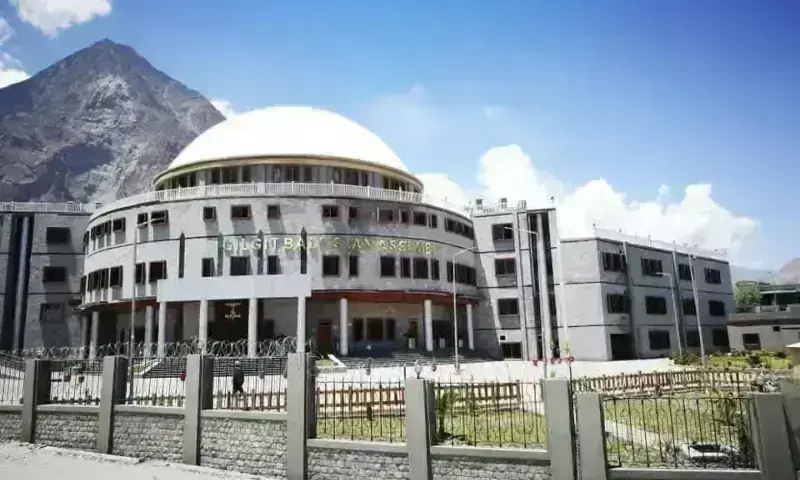
The newly elected Gilgit-Baltistan (GB) Assembly has unanimously passed a resolution demanding provisional provincial status from the federal government. This is not a new demand, as the assembly has previously called for similar recognition, reflecting a cross-party and cross-ethnic consensus within GB. The resolution also advocates for the region to be granted "constitutional and political rights" and included in the National Finance Commission (NFC) Award until provisional provincial status is achieved. Crucially, GB lawmakers specified that this provisional status would be "without prejudice" to Pakistan's stance on the Kashmir dispute with India, a clarification intended to alleviate concerns about jeopardizing Pakistan's position. The All Parties Hurriyat Conference, AJK chapter, has also endorsed the GB Assembly's demand, acknowledging the historical ties between Kashmir and GB. The region's political evolution has seen incremental integration into Pakistan since its liberation from Dogra rule in 1947-48, with various leaders like Zulfikar Ali Bhutto, Benazir Bhutto, Pervez Musharraf, Asif Zardari, and Nawaz Sharif taking steps to enhance its political and constitutional rights. Despite this progress, the current demand is for integration as a provisional province. However, the integration process must be carefully managed to ensure it does not undermine the Kashmir cause, requiring constitutional amendments. A potential framework for this integration exists in the Sartaj Aziz report, and PPP chief Bilawal Bhutto-Zardari has proposed constitutional conventions for both GB and Azad Jammu and Kashmir (AJK). Discontent in both regions often stems from issues of governance and perceived excessive central government involvement. Ultimately, lawmakers, legal experts, and stakeholders must collaborate to find a solution that satisfies GB's aspirations without compromising Pakistan's position on Kashmir, recognizing the need to grant the region's population a voice in national affairs.
The Gilgit-Baltistan Assembly's resolution highlights a long-standing demand for greater political integration and rights within Pakistan. The careful framing of this demand, particularly the explicit statement that provisional provincial status would be "without prejudice" to Pakistan's position on the Kashmir dispute, suggests a strategic attempt to navigate complex geopolitical sensitivities. This approach acknowledges both the internal aspirations for self-determination and the external implications for regional territorial claims. The call for inclusion in the NFC Award and the reference to the Sartaj Aziz report indicate a desire for tangible economic and constitutional benefits. Future integration efforts will likely require balancing the principles of democratic representation and regional autonomy against the broader framework of national foreign policy and constitutional law, particularly concerning the unresolved Kashmir issue. The challenge lies in devising a governance model that empowers the people of GB while maintaining national policy coherence and adhering to legal and constitutional parameters.
AI-generated to prompt reflection — not editorial opinion, not advice, not a statement of fact. How this works.