Gilgit-Baltistan Chief Minister-Elect to Take Oath Today; Bilawal Bhutto-Zardari Attends
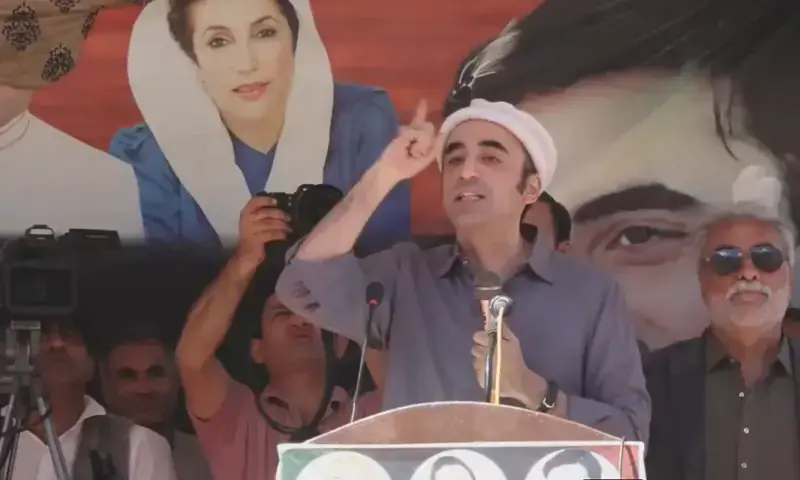
Advocate Amjad Hussain, the chief minister-elect of Gilgit-Baltistan, is scheduled to take his oath of office today, July 6th, in Chinar Bagh. The ceremony was initially planned for July 1st but was postponed due to the absence of PPP chairman Bilawal Bhutto-Zardari, who was in Iran for Ayatollah Ali Khamenei's funeral. Bhutto-Zardari returned from Tehran and arrived in Skardu on Sunday, where he was met by Governor Syed Mehdi Shah, CM-elect Hussain, and senior PPP leaders before traveling to Gilgit. Hussain had been elected unopposed as the Leader of the House in the GB Assembly on June 22nd. Bhutto-Zardari is also expected to attend a memorial for the martyrs of the Gilgit-Baltistan War of Independence and address the attendees. Following this, Governor Shah will administer the oath to the new chief minister. The PPP plans to include the Istehkam-i-Pakistan Party (IPP) in the government, allocating three ministries to them due to their support for the PPP's chief minister candidate. The PML-N also supported the PPP candidate under an agreement that grants them the deputy speaker position, the governor's post, and the opposition leader slot in the GB Assembly. In a separate development, the Gilgit-Baltistan Supreme Appellate Court has ordered re-polling at Loshi Polling Station in GBA-15 Diamer and at eight polling stations in GBA-17 Diamer, following election petitions challenging the results.
The political landscape in Gilgit-Baltistan is shaped by inter-party agreements and judicial oversight, reflecting a complex governance dynamic. The postponement of the swearing-in ceremony due to the chairman's international engagements highlights the centralized decision-making within the PPP and its influence on regional administration. The formation of a coalition government, involving the IPP and support from PML-N, indicates a strategic approach to power-sharing and stability, balancing diverse political interests. The court-ordered re-polling underscores the importance of electoral integrity and the judicial branch's role in ensuring fair representation, particularly in a region with a history of contested election outcomes. These developments suggest a governance model that navigates national political alignments and local electoral challenges, with potential implications for future policy implementation and regional development in the coming decade.
AI-generated to prompt reflection — not editorial opinion, not advice, not a statement of fact. How this works.