Gilgit-Baltistan Government Seeks $259 Billion for Full Fiscal Year, Presents Interim Budget
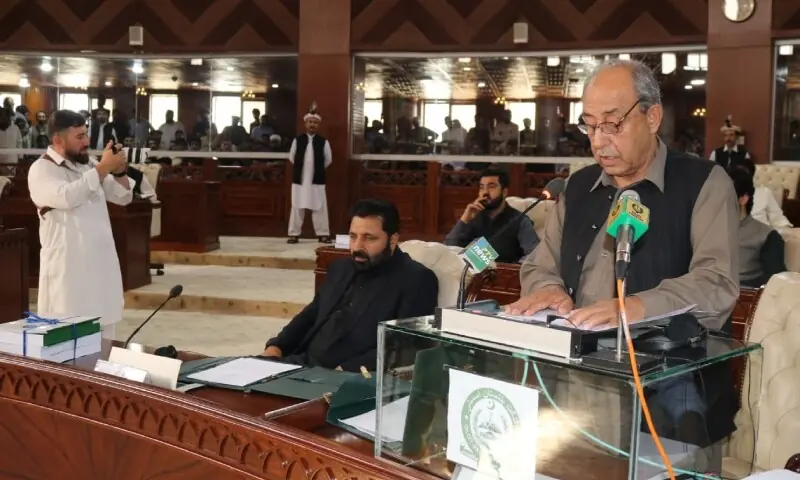
The Gilgit-Baltistan (GB) government has presented an interim budget of Rs20.48 billion for the first quarter of the 2026-27 fiscal year. This interim measure is intended to maintain government operations until the full annual budget is presented. Lawmaker Mohammad Ali Akhtar presented the budget in the Gilgit-Baltistan Assembly, highlighting the region's significant development and infrastructure needs. The GB government is urgently requesting Rs258.95 billion from the federal government for the entire fiscal year to address these challenges. Mr. Akhtar noted that the current fiscal year's federal allocation of Rs158.54 billion is insufficient for the region's pressing requirements. The interim budget allocates Rs88 billion for non-development expenditures and aims to generate Rs6.98 billion in non-tax revenue. Specific allocations include Rs15.22 billion for salaries and allowances, Rs1.38 billion for administrative expenses, and Rs15 billion for the wheat subsidy program. Significant funds are also earmarked for disaster recovery and public services, such as Rs275.8 million for flood rehabilitation, Rs880 million for disaster management, and Rs450 million for heavy drones. Additional proposed spending covers health initiatives, urban development, local councils, and waste management. Mr. Akhtar emphasized that Gilgit-Baltistan's unique geography, including its mountainous terrain and scattered settlements, makes development projects considerably more expensive and challenging. He stated that existing financial resources are inadequate for critical sectors like power, health, and transportation, underscoring the necessity of the requested federal support to resolve long-standing issues.
The Gilgit-Baltistan government's budget presentation underscores the persistent challenge of resource allocation for regions with unique geographical and developmental hurdles. The substantial funding request for the 2026-27 fiscal year, particularly for infrastructure and disaster management, reflects the inherent costs associated with developing remote and geographically complex territories. This situation highlights a systemic tension between national development priorities and the specific needs of constituent regions. The reliance on federal transfers suggests a governance model where regional autonomy in fiscal matters may be limited, necessitating a continuous dialogue and negotiation process with the central government. Looking ahead, the increasing impacts of climate change and the need for robust infrastructure in such regions will likely intensify these resource demands, prompting a re-evaluation of sustainable funding mechanisms and intergovernmental fiscal relations to ensure equitable development and resilience.
AI-generated to prompt reflection — not editorial opinion, not advice, not a statement of fact. How this works.