Gilgit Settlements Near Glacial Lakes Increase Flood Risk, Suparco Warns
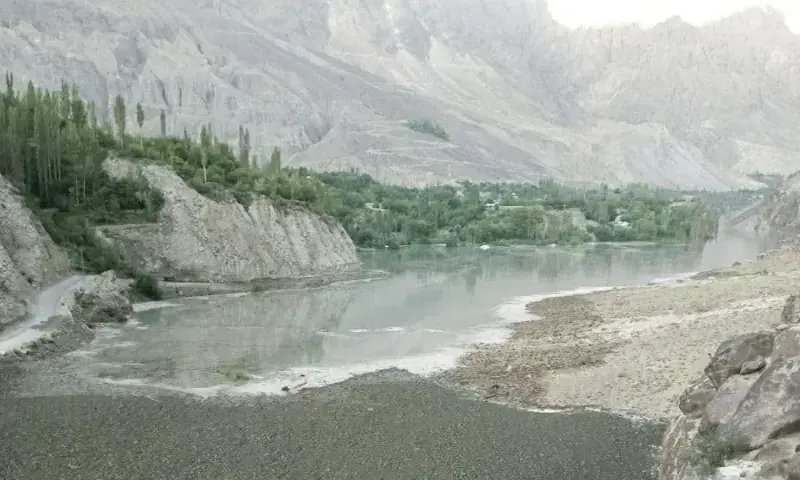
Pakistan's Space and Upper Atmosphere Research Commission (Suparco) has issued a warning regarding the unchecked expansion of settlements near a glacial lake-fed stream close to Gilgit city. The monsoon season is underway, and Suparco is concerned that these settlements, encroaching on the natural floodplain, could lead to severe risks for lives, property, and livestock. Satellite imagery from 2013 and 2023 shows a significant, uncontrolled growth of construction along the stream, which is fed by upstream glacial lakes highly susceptible to Glacial Lake Outburst Floods (Glofs).
Suparco stated that the reduced capacity of the stream's channel and floodplain due to land-use changes can cause sudden overbank flooding and debris flows in the event of a Glof or extreme rainfall. This risk has been amplified by human negligence, weak land-use regulation enforcement, and a lack of risk-informed urban planning. Despite clear hazard indicators, construction persists. Pakistan has experienced 89 flood events in the past 25 years, with impacts worsening due to urban development in flood-prone areas.
Suparco continuously monitors glacial lakes using satellite imagery to support early warning systems. Currently, 131 potentially dangerous glacial lakes are being monitored. In the past two weeks, the number of unfrozen glacial lakes has increased from 24 to 40, indicating accelerated seasonal melting due to rising summer temperatures. While most unfrozen lakes remain within historical extents, an expansion beyond these limits signifies increased water storage and higher instability risks. Authorities are advised to maintain high preparedness, especially in downstream areas.
The situation near Gilgit highlights a critical tension between development pressures and environmental risk management in a climate-vulnerable region. The unchecked expansion of settlements into natural floodplains, documented by Suparco's satellite monitoring, directly increases exposure to hazards like Glofs, exacerbated by accelerated glacier melt. This points to systemic governance challenges, where land-use regulations appear insufficient or poorly enforced, failing to integrate scientific risk assessments into urban planning. The increasing number of unfrozen glacial lakes, a direct consequence of rising global temperatures, presents an evolving threat that demands proactive, science-driven adaptation strategies. Future planning must prioritize resilient infrastructure and potentially relocation or strict zoning in high-risk areas, balancing immediate development needs with long-term ecological and human safety imperatives.
AI-generated to prompt reflection — not editorial opinion, not advice, not a statement of fact. How this works.