Glacier Melt Fuels Floods and Damage Across Gilgit-Baltistan
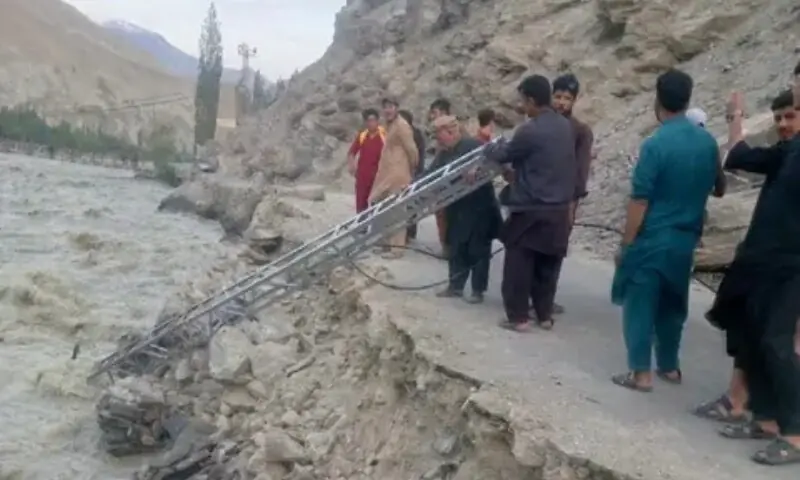
Rapid glacier melting, exacerbated by an ongoing heatwave, has triggered widespread floods and mudslides across Pakistan's Gilgit-Baltistan region, causing significant damage. The National Disaster Management Authority (NDMA) has issued a Glacial Lake Outburst Flood (Glof) alert for the Hoper and Hisper valleys in Nagar district due to accelerated melt and increased water discharge. The rising water levels in rivers and streams have damaged crucial infrastructure, including link roads, bridges, and electricity supply, as well as agricultural land and property in several remote areas. In Ghanche district, multiple link roads and bridges were affected, and a suspension bridge over the Hushe Nallah was submerged, cutting off access for local communities. Flooding also temporarily blocked the Siachen, Chorbat, and Ghowari roads, and a flash flood disrupted traffic on the Karakoram Highway near the Pakistan-China border, stranding passengers and cargo vehicles. Ghizer district experienced damage to homes, crops, and roads in Matramdan village, with concerns also raised about an artificial lake formed by previous floods. River erosion has impacted homes in Maulaabad, and a newly constructed bridge in Ishkoman is under threat. Rescue 1122 Gilgit-Baltistan has issued a public advisory warning of increased risks of Glofs, flash floods, and landslides, urging residents and tourists to exercise extreme caution, avoid unnecessary travel, and stay clear of rivers and hazardous areas. The NDMA highlighted the risk of rapid melt, debris flows, and severe erosion, warning of potential disruptions to transport links and increased risks for downstream communities, prompting calls from residents for immediate government protection measures.
The events in Gilgit-Baltistan highlight the escalating vulnerability of high-altitude regions to climate change impacts, particularly accelerated glacier melt. This situation underscores the critical need for robust, forward-looking infrastructure planning and disaster preparedness strategies that account for the increasing frequency and intensity of extreme weather events. The reliance on traditional infrastructure, such as bridges and roads, in areas prone to glacial floods and landslides presents a systemic risk that requires innovative engineering solutions and potentially relocation strategies for at-risk communities. Future development in such regions must integrate climate resilience from the outset, considering the long-term hydrological and geological shifts driven by global warming. Proactive investment in early warning systems and community-based adaptation measures will be crucial to mitigating future losses and ensuring the safety of populations in these sensitive ecosystems.
AI-generated to prompt reflection — not editorial opinion, not advice, not a statement of fact. How this works.