Glass substrate maker Xunlin Technology secures nearly $27 million in Series B funding
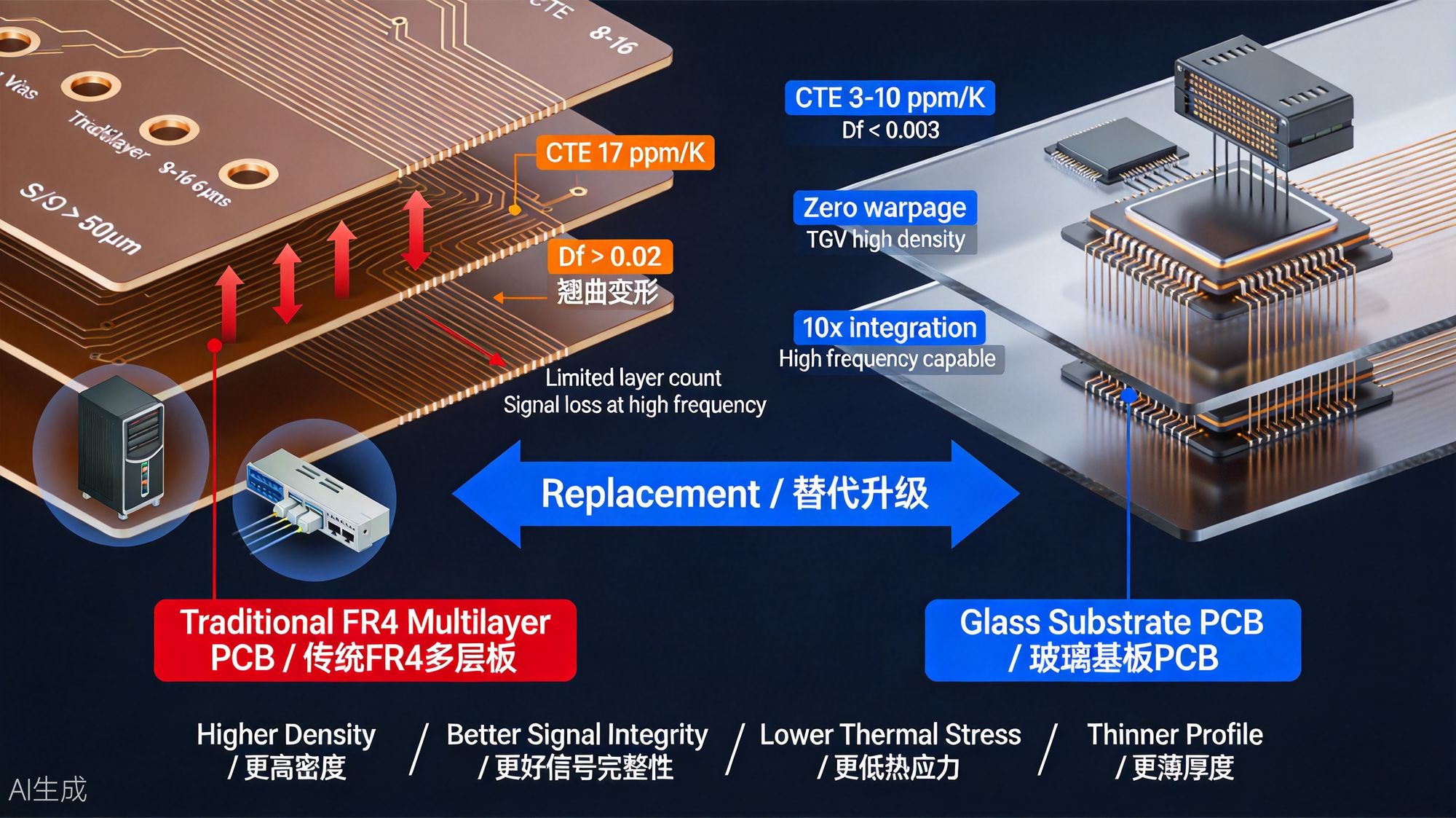
Chinese glass substrate manufacturer Xunlin Technology has successfully closed a Series B funding round, raising nearly 200 million yuan (approximately $27 million USD). This marks the company's third financing round in six months, underscoring significant investor confidence in the burgeoning glass substrate market. The funding round saw participation from new investors including Inno-Origin Capital, Qiancheng Capital, Haimex, Guangpu Co., and Tongxin Capital, alongside continued investment from existing shareholders like Jinyu Mao Wu, Haitong Kaiyuan, and Beian Chan Tou. These funds are earmarked for expanding Xunlin Technology's glass substrate production capacity, establishing and launching new packaging production lines, advancing research and development for process precision, and strategically positioning for future applications in optical communications.
The surge in demand for advanced packaging substrates, driven by the AI boom, has led to extended lead times for traditional organic substrates. Simultaneously, the cost of electronic-grade glass fiber cloth, a critical component in organic substrates, has more than doubled since its 2025 low, with supply chain constraints creating a persistent shortage. This situation, coupled with the physical limitations of organic substrates in handling high-frequency signals and thermal expansion, is creating a significant market opportunity for glass substrates. Major industry players like Intel, TSMC, and Samsung are already investing heavily in glass substrate technologies, signaling a shift towards this material for next-generation electronics.
Xunlin Technology's strategy involves developing three interconnected process platforms to progressively meet market demands. The initial platform focuses on large-format glass-based PCBs for display applications, with extensions into high-density interconnect (HDI) boards for high-speed communication. The second platform targets advanced interconnects for glass core substrates (GCS), aiming to replace the currently supply-constrained ABF substrates used in advanced chip packaging. The third platform is geared towards integrated photonics and advanced packaging, developing glass interposers (GI) with optical functionalities for co-packaged optics (CPO) and high-bandwidth memory (HBM) applications. The company emphasizes its proprietary PVD copper plating technology and a unique four-element alloy seed layer, which reportedly provide superior copper adhesion strength, enabling them to overcome key technical hurdles in cost, high-density wiring, and overall yield, positioning them for mass production.
The substantial Series B funding for Xunlin Technology highlights a critical inflection point in the semiconductor packaging and substrate industry, driven by the escalating demands of AI computation and the inherent limitations of organic materials. The significant price increases and supply chain disruptions for essential components like electronic-grade glass fiber cloth are creating a compelling economic rationale for the adoption of glass substrates, which offer superior thermal and electrical properties. This transition represents a systemic shift, moving from incremental improvements in organic substrates to a fundamental material substitution. Investors are betting on Xunlin's ability to overcome the significant manufacturing challenges associated with glass substrates, particularly in achieving cost-competitiveness, high-density interconnects, and reliable mass production yields. The company's multi-platform approach suggests a strategy to capture value across different segments of the electronics market, from display backplanes to advanced chip packaging and optical integration, positioning itself to benefit from the long-term trend of increasing electronic complexity and performance.
AI-generated to prompt reflection — not editorial opinion, not advice, not a statement of fact. How this works.
