Global Football Landscape Shifts: Brazil, Germany, Italy Absent from World Cup Semifinals
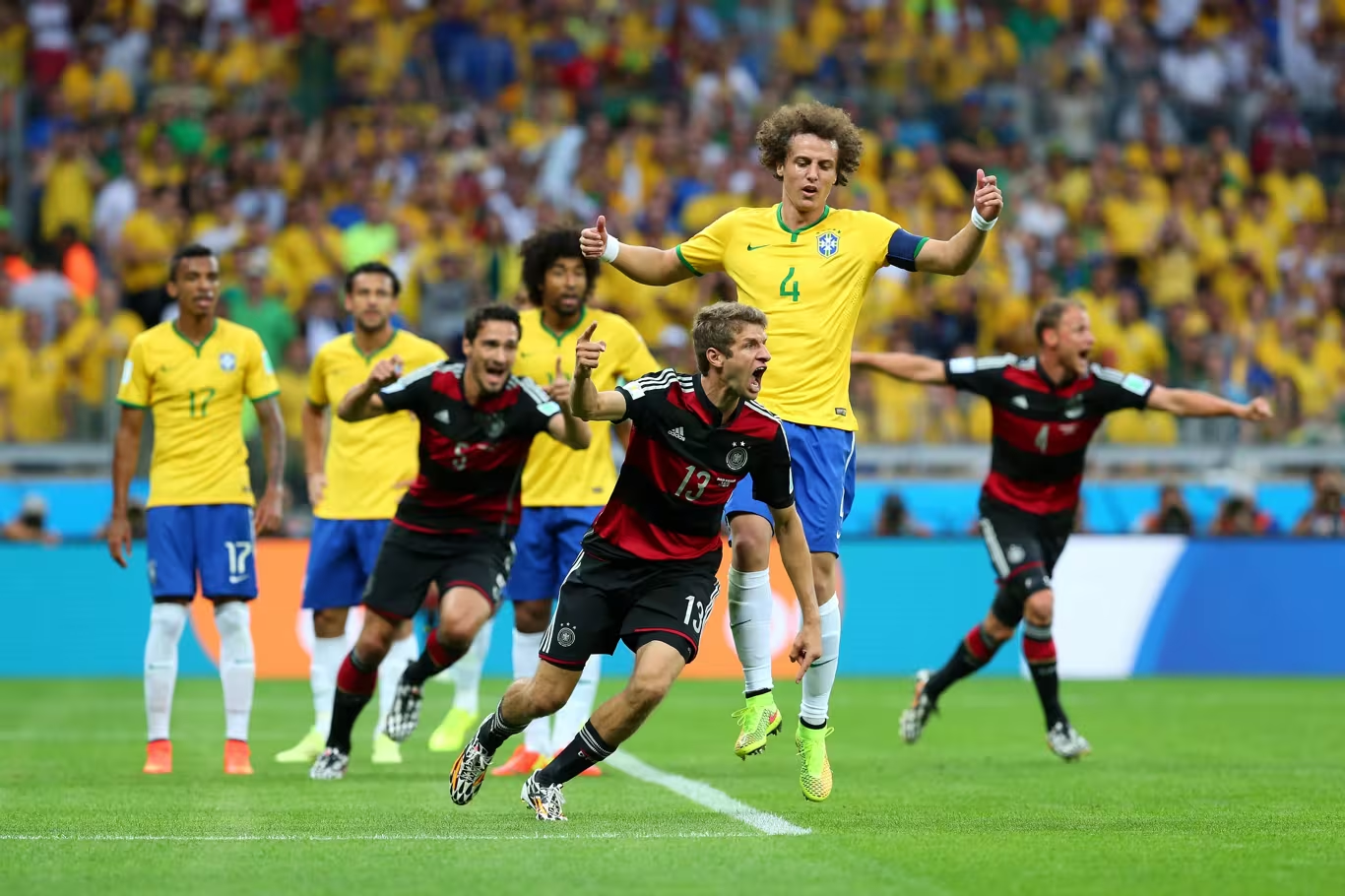
The traditional powerhouses of Brazil, Germany, and Italy have failed to reach the semifinals of the current World Cup, marking a significant shift in international football. Their absence sees Argentina, France, Spain, and England advancing to the final stages of the tournament. This development highlights a changing competitive balance within the sport on a global scale. The traditional dominance once held by these footballing giants appears to be waning, making way for new contenders to emerge and challenge for the ultimate prize. The semifinals now feature a different set of nations, underscoring the evolving dynamics of international football. This transition suggests a more fluid and unpredictable landscape, where past glories do not guarantee future success. The makeup of the final four teams indicates a potential redistribution of power and influence within the sport's hierarchy. Fans and analysts are observing this evolution closely as it redefines the established order of international football.
The absence of historically dominant nations like Brazil, Germany, and Italy from the World Cup semifinals suggests a potential maturation and diversification of talent across the global football ecosystem. This shift may reflect increased investment in player development and coaching infrastructure in emerging football nations, alongside evolving tactical approaches. Such a redistribution of competitive strength could foster greater unpredictability and engagement in future tournaments, challenging established hierarchies and potentially democratizing success. It also prompts consideration of how global sports governance and resource allocation might adapt to support sustained parity and prevent the resurgence of concentrated dominance.
AI-generated to prompt reflection — not editorial opinion, not advice, not a statement of fact. How this works.