Global maritime conflicts threaten more than oil prices, echoing historical US actions
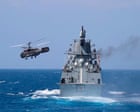
A global maritime war is unfolding, extending beyond the Strait of Hormuz to regions like the North Sea, and threatening more than just oil prices. The article draws a parallel between current US military actions to protect shipping from Iranian attacks and a similar US naval mission in the Mediterranean between 1825 and 1827. During that earlier period, a US squadron led by Commodore John Rodgers was dispatched to defend American vessels from Greek corsairs and pirates. Despite the rhetoric of liberty surrounding the young republic, the US squadron's objective was purely self-serving: to safeguard American trade and business interests, rather than to support Greece's struggle for independence from the Ottoman Empire. The author suggests that the current US military campaign, particularly in the context of tensions with Iran, has similarly narrowed its focus to protecting national economic interests, moving away from broader political objectives. This historical comparison highlights a recurring pattern in US foreign policy, where the assertion of maritime control is primarily driven by economic imperatives.
The current geopolitical landscape reveals a resurgence of state-centric maritime security concerns, reminiscent of historical patterns where economic interests often supersede broader international cooperation. The article posits that the erosion of a 'rules-based order' in maritime affairs necessitates direct state intervention to protect trade routes, a strategy that historically prioritizes national economic advantage. This approach, while effective in securing immediate commercial interests, may inadvertently foster a zero-sum dynamic among nations, potentially undermining long-term stability and collaborative governance frameworks. Examining this through a future-oriented lens, the increasing reliance on national military power for economic protection in contested waters could lead to heightened tensions and a fragmented global commons, especially as technological advancements enable new forms of maritime competition and control.
AI-generated to prompt reflection — not editorial opinion, not advice, not a statement of fact. How this works.