Global Markets Tumble as Trump Declares Iran Peace Deal Over; Oil Surges
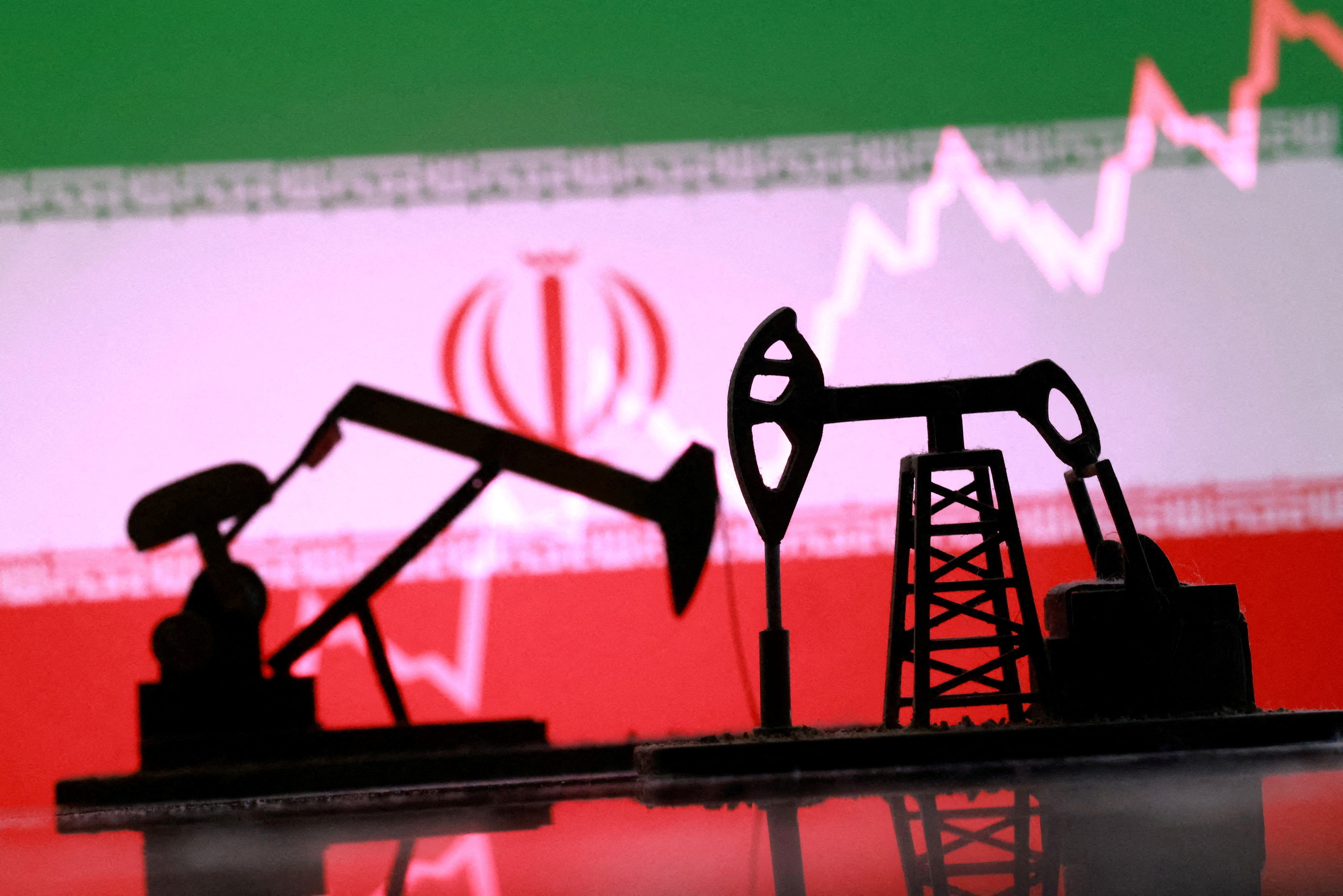
Global financial markets experienced a significant downturn on Wednesday, May 8th, following U.S. President Donald Trump's declaration that a preliminary peace agreement with Iran has "ended." This statement followed a fresh exchange of attacks between the two nations, reigniting fears of an escalating conflict in the Middle East. The heightened tensions prompted investors to seek safer assets and raised concerns about potential disruptions to global oil supply, particularly due to risks surrounding the Strait of Hormuz, a critical shipping route for crude oil.
In response to these geopolitical anxieties, oil prices surged by over 5%. Brent crude futures rose 5.06% to $77.91 per barrel, while U.S. WTI crude advanced 4.97% to $73.94 per barrel. This price increase reflects market fears that further confrontations could impede oil production and transportation in the Persian Gulf region, where the Strait of Hormuz accounts for approximately one-fifth of the world's traded oil. The U.S. dollar also strengthened, with the DXY index nearing 101.17 points, its highest level in about a week, as investors favored the currency as a safe haven.
U.S. stock market futures indicated a decline before the opening bell, with Dow Jones futures down 1.34%, S&P 500 futures down 1.06%, and Nasdaq 100 futures down 1.55%. This sentiment is attributed to concerns that rising oil prices could fuel global inflation and complicate future interest rate cuts by the U.S. Federal Reserve. European stock markets saw broad losses, with the pan-European STOXX 600 index falling around 1.6%, driven by consumer, tourism, and technology sectors sensitive to energy costs and economic uncertainty. Conversely, oil company stocks saw gains. Asian markets presented a mixed performance: Tokyo's Nikkei fell 2.11%, South Korea's Kospi dropped 5.35%, and mainland China indices declined, while Hong Kong's Hang Seng rose 2.99%, boosted by tech stocks like Alibaba. The renewed escalation involved U.S. airstrikes on southern Iran after accusing Tehran of attacking commercial vessels in the Strait of Hormuz, followed by Iranian attacks on U.S. military bases in Bahrain and Kuwait. Trump's subsequent declaration effectively ended the peace accord and dialogue with Iran.
The market's sharp reaction underscores the inherent fragility of global stability when geopolitical tensions intersect with critical commodity supply chains. The interplay between U.S. foreign policy pronouncements and the price of oil highlights a persistent systemic risk, where regional conflicts can rapidly translate into global economic uncertainty. Investors' flight to safety and the subsequent volatility across diverse asset classes demonstrate a collective hedging strategy against potential supply shocks and inflationary pressures. Looking ahead, the reliance on volatile energy markets and the strategic importance of chokepoints like the Strait of Hormuz present ongoing challenges for economic forecasting and risk management, potentially influencing long-term energy security strategies and the pace of global economic integration.
AI-generated to prompt reflection — not editorial opinion, not advice, not a statement of fact. How this works.