Global Reactions to New US Tariffs Imposed Under Section 301
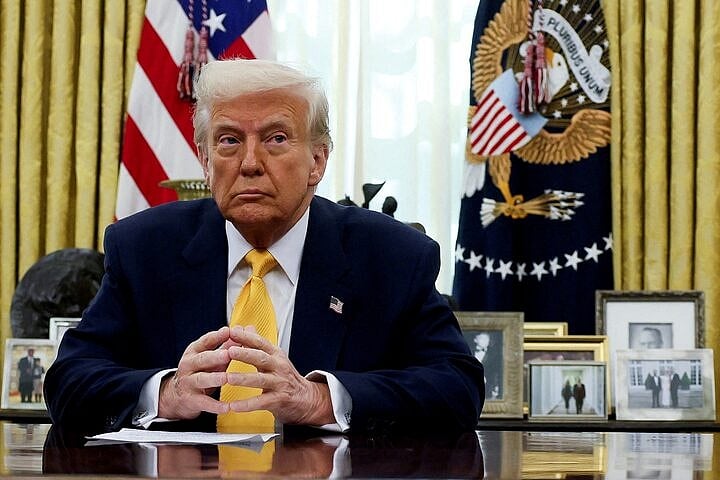
Following the imposition of new tariffs by the United States on goods from over 80 countries, ranging from 10% to 12.5%, various nations have voiced their reactions. The U.S. administration cited Section 301 of the Trade Act of 1974, alleging that these countries failed to implement effective measures against imports of goods produced with forced labor. Many affected nations have refuted these accusations. President Trump's stated goals are to boost domestic production in the U.S. and reduce trade deficits. This policy, however, faces significant legal challenges, reminiscent of the U.S. Supreme Court's previous ruling against his widely discussed retaliatory tariffs, which were deemed unconstitutional. The new tariffs replace a global 10% tariff that expired on Thursday night, leading to renewed criticism that the U.S. is misusing its laws. Australia's Trade Minister, Don Farrell, denied any involvement in forced labor, emphasizing Australia's commitment to combating modern slavery and its status as a major exporter of beef, gold, and copper. He stated Australia would pursue diplomatic efforts with the U.S. to have the tariffs withdrawn. New Zealand's Prime Minister, Christopher Luxon, expressed significant disappointment, noting that the U.S. investigation provided no meaningful evidence of forced labor. The UK government stated its exports would not be negatively impacted, as certain sectors are exempt under a prior trade agreement, and acknowledged the U.S. recognition of the UK's efforts to prevent imports of goods made with forced labor. Japan's Chief Cabinet Secretary, Minoru Kiihara, protested the U.S. allegations, calling it regrettable that tariffs were imposed based on the claim that Japan lacks measures against such imports, asserting that Japanese industry adheres to international standards. He also confirmed that under a bilateral trade agreement, Japanese goods would not face tariffs exceeding 15%. The European Commission expressed cautious optimism, viewing the new policy as consistent with existing U.S.-EU trade understandings and commitments. China's Ministry of Foreign Affairs condemned the 12.5% tariff as a unilateral measure, reiterating its long-standing opposition to trade wars, with a potential meeting between Presidents Trump and Xi Jinping scheduled for September. India's textile and garment exporters expressed concern, as India was not included in a list of countries receiving tariff exemptions for certain products, particularly those made with U.S. cotton. Ashwin Chandran, Chairman of the Confederation of Indian Textile Industry, warned that such discriminatory policies could lead to a loss of international orders for India's textile sector.
The U.S. administration's application of Section 301 of the Trade Act of 1974, citing forced labor as justification for new tariffs, presents a complex interplay of trade policy, national security concerns, and international relations. While the stated aim is to address labor exploitation and rebalance trade, the broad application of these tariffs, impacting numerous trading partners, raises questions about the proportionality and evidence base of the accusations. The international response highlights a divergence in perceptions and compliance with U.S. definitions of forced labor, suggesting that differing regulatory frameworks and enforcement mechanisms are at play. This approach risks escalating trade disputes and potentially fragmenting global supply chains, particularly in sectors like textiles where India has expressed significant concerns about competitive disadvantage. Future trade dynamics may increasingly hinge on the alignment of domestic labor and production standards with U.S. requirements, potentially creating new barriers or incentives for international cooperation and regulatory harmonization.
AI-generated to prompt reflection — not editorial opinion, not advice, not a statement of fact. How this works.