GM's autonomous vehicle division triples merged code requests using AI agents
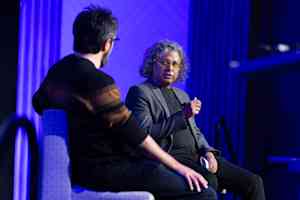
General Motors' (GM) autonomous driving division has significantly boosted its engineering efficiency by integrating AI agents into its workflows, leading to a threefold increase in merged pull requests. Rashed Haq, GM's VP of autonomous vehicles, explained that engineers now spend only 15% of their time writing code, with AI agents handling the remaining 85% of tasks. These tasks include analyzing vehicle data, triaging problems, running experiments, and testing potential solutions. This strategic redesign of engineering processes, focusing on automating the longest bottlenecks within development loops, has resulted in faster releases and a reduction in defects reaching later stages of development.
GM implemented this by giving AI agents access to internal tools and vast amounts of company data via customized Model Context Protocol (MCP) servers. They also developed "skills," which are instruction documents guiding agents on specific tasks. For instance, agents can analyze telemetry data from vehicles, identify potential issues, and create tickets for engineers. Permissions for these agents are based on the engineer's own access levels, with the engineer remaining accountable for the agent's output. The company also uses agents for parallel machine-learning experiment execution. The success of this initiative, which exceeded GM's initial expectations for productivity gains, has been supported by a dedicated team of engineers who helped other teams adopt the new tools and practices.
AI agents are proving to be transformative tools for accelerating complex software development cycles, particularly within specialized fields like autonomous driving. By automating non-coding tasks such as data analysis, problem triage, and testing, GM's approach highlights a shift from AI as a coding assistant to AI as a workflow orchestrator. This strategy addresses the historical inefficiency of software development, where coding itself represents a fraction of total engineering effort. The success hinges on granting agents controlled access to relevant data and tools, while maintaining human oversight and accountability at critical junctures. As AI capabilities advance, organizations will likely need to continuously redesign their operational frameworks to harness these technologies effectively, moving beyond incremental improvements to fundamental process re-engineering. The challenge will be to scale these agentic systems while ensuring robust security, ethical considerations, and the interpretability of AI-driven outcomes for human engineers.
AI-generated to prompt reflection — not editorial opinion, not advice, not a statement of fact. How this works.