Goiás Tourist Trail Features Site of Alleged Death of Folkloric Figure Chico Mineiro
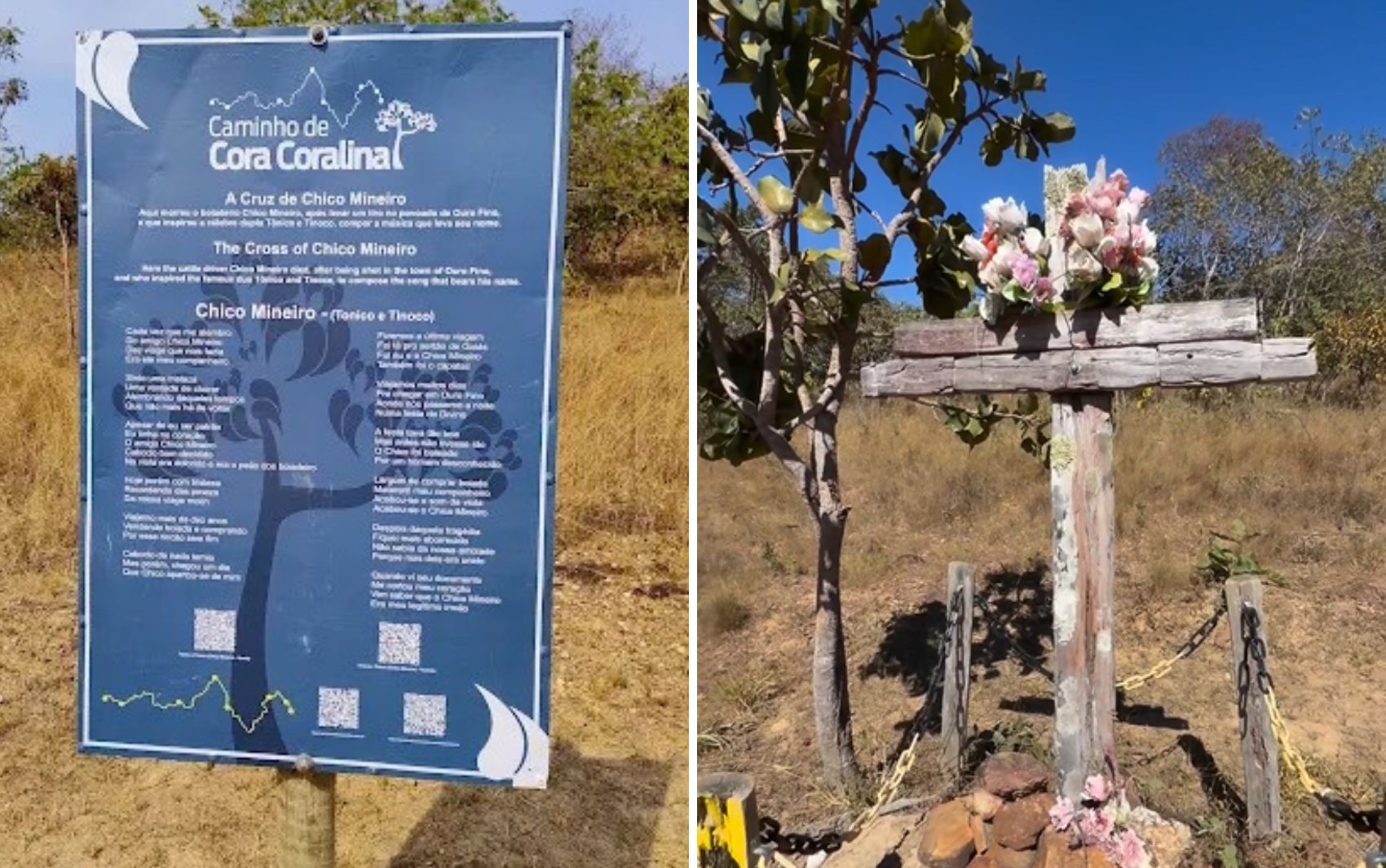
A 300 km tourist trail in Goiás, Brazil, known as the Caminho de Cora Coralina, now includes a stop at the purported site where the legendary cowboy Chico Mineiro died. This trail, marked with bilingual signage and poetry from Goian writers, is recognized as the world's first long-distance poetry trail. At the specific location, visitors can find flowers and a plaque displaying the lyrics of the famous sertanejo song "Chico Mineiro," which was inspired by the cowboy. Bruno Ribeiro, Director of Communication for the Caminho de Cora, highlighted that the trail offers not only beautiful landscapes like the Serra de Jaraguá but also historical and literary insights into Goiás. However, José Carlos Perez, son of the singer Tinoco, stated that there is no concrete proof of Chico Mineiro's real existence or the exact location of his death, attributing the story's widespread acceptance to popular belief and the power of folk music. The song recounts Chico Mineiro's discovery that the man who killed him was his own brother. Inaugurated in 2018, the trail connects eight villages between Salto de Corumbá and Cidade de Goiás, inspired by routes like the Camino de Santiago and tracing the old "Gold Route." It can be walked in about 15 days or cycled in five, is fully signposted, and is free to access. A passport is available for R$45.00 to collect stamps and receive a completion certificate, aiding in the preservation of the trail's memory and infrastructure. The song itself was reportedly composed by Francisco Ribeiro and adapted by the duo Tonico and Tinoco into a "historical toada" format to convey the narrative.
The incorporation of Chico Mineiro's alleged death site into the Caminho de Cora Coralina trail highlights the powerful intersection of folklore, music, and tourism. While the narrative's historical veracity is debated, its cultural resonance has been leveraged to create a unique tourist experience. This strategy taps into the enduring appeal of local legends and the emotional connection forged by popular music, transforming a potentially apocryphal story into a tangible point of interest. The trail's design, emphasizing poetry and history, suggests a broader aim to preserve and promote regional cultural heritage. The initiative also demonstrates how intangible cultural assets, like folk songs and legends, can be monetized and sustained through public-private partnerships and visitor engagement, such as the passport system, thereby contributing to local economies and cultural preservation efforts.
AI-generated to prompt reflection — not editorial opinion, not advice, not a statement of fact. How this works.