Google's SynthID Watermark Debunks First Major Deepfake of Mitch McConnell
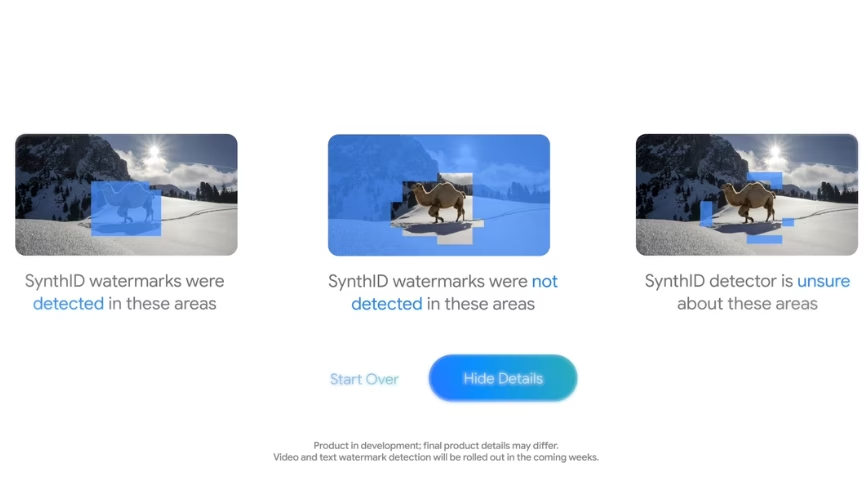
Google's SynthID watermarking technology has successfully debunked its first prominent deepfake. The AI-generated image, which falsely depicted Senator Mitch McConnell in a hospital bed and in distress, had gained significant traction on social media platforms like Reddit and X. Fact-checking organization Snopes utilized SynthID to confirm the image's artificial origin. The watermarking system embeds imperceptible signals into AI-generated content, allowing for its identification. This incident marks a significant real-world test for SynthID's capabilities in combating misinformation. The ability to reliably detect AI-generated content is becoming increasingly crucial as such technology becomes more sophisticated and accessible. Google's SynthID aims to provide a technical solution to distinguish between authentic and synthetic media. The successful debunking of this high-profile deepfake demonstrates the potential of watermarking technologies in preserving information integrity in the digital age. Further adoption and testing of such systems will be key to their effectiveness.
AI-generated imagery presents a growing challenge to information veracity, with tools like Google's SynthID emerging as potential countermeasures. The successful identification of a deepfake depicting Senator Mitch McConnell highlights the ongoing technological race between AI content creation and detection. While SynthID offers a technical mechanism for verifying authenticity, its broader impact will depend on widespread adoption and the ability of detection systems to keep pace with increasingly sophisticated AI generation techniques. The incident underscores the systemic need for robust digital literacy initiatives alongside technological solutions to mitigate the societal risks posed by synthetic media.
AI-generated to prompt reflection — not editorial opinion, not advice, not a statement of fact. How this works.