Governador Valadares Building Collapse: Demolition Ordered Due to Construction Flaws
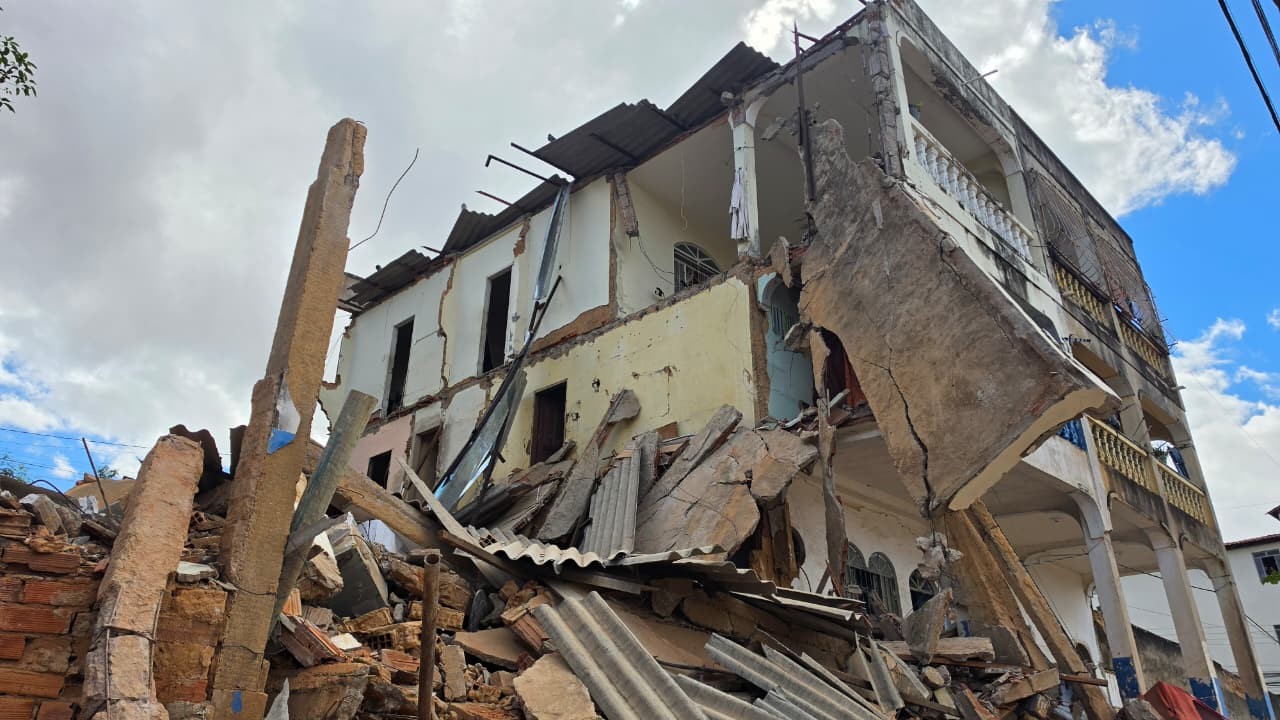
A partially collapsed building in the Jardim Pérola neighborhood of Governador Valadares, Brazil, has been deemed unsafe and ordered for urgent demolition. An inspection conducted on Monday, May 20th, by the Civil Defense, city engineers, and the Regional Council of Engineering and Agronomy (Crea-MG) revealed preliminary findings of construction flaws and non-compliance with technical standards. The assessment indicated a mismatch between the rebar used in the structure and the load capacity of its three floors, along with other execution deficiencies. The definitive technical report, expected by the end of Monday, will detail the exact causes of the collapse. The remaining structure is considered irreparable and a public safety risk. The property owner must initiate demolition this week; otherwise, the municipality will carry out the demolition and pursue legal action. The collapse occurred on Sunday, May 19th, injuring three people: one man partially buried and rescued by firefighters, an elderly woman in a wheelchair who fell from the third floor onto debris, and a third victim injured while assisting others. A neighboring building on the same lot, with an independent structure, shows no immediate signs of damage but will be re-inspected after the demolition. Residents are barred from entering the condemned building to retrieve belongings; a planned retrieval with official assistance will be arranged later. The building housed six families, totaling 14 residents, who are being supported by the Municipal Social Assistance Secretariat with aid like social rent. Authorities found no prior complaints or documentation regarding the building's regularization with inspection agencies.
This incident highlights critical failures in construction oversight and adherence to building codes, leading to a preventable structural collapse and injuries. The preliminary findings suggest a systemic issue where inadequate structural design and execution were not identified or addressed during construction. The municipality's response, including the order for urgent demolition and potential subsidiary execution, reflects a reactive approach to public safety. Moving forward, strengthening pre-construction review processes, implementing more rigorous and frequent site inspections, and establishing clear accountability for developers and inspectors could mitigate future risks. The event also underscores the importance of robust urban planning and enforcement mechanisms to ensure the safety and integrity of residential buildings, particularly in rapidly developing areas.
AI-generated to prompt reflection — not editorial opinion, not advice, not a statement of fact. How this works.