Governador Valadares Responds to Severe Storm Damage, Focusing on Tree Removal and Risk Mitigation
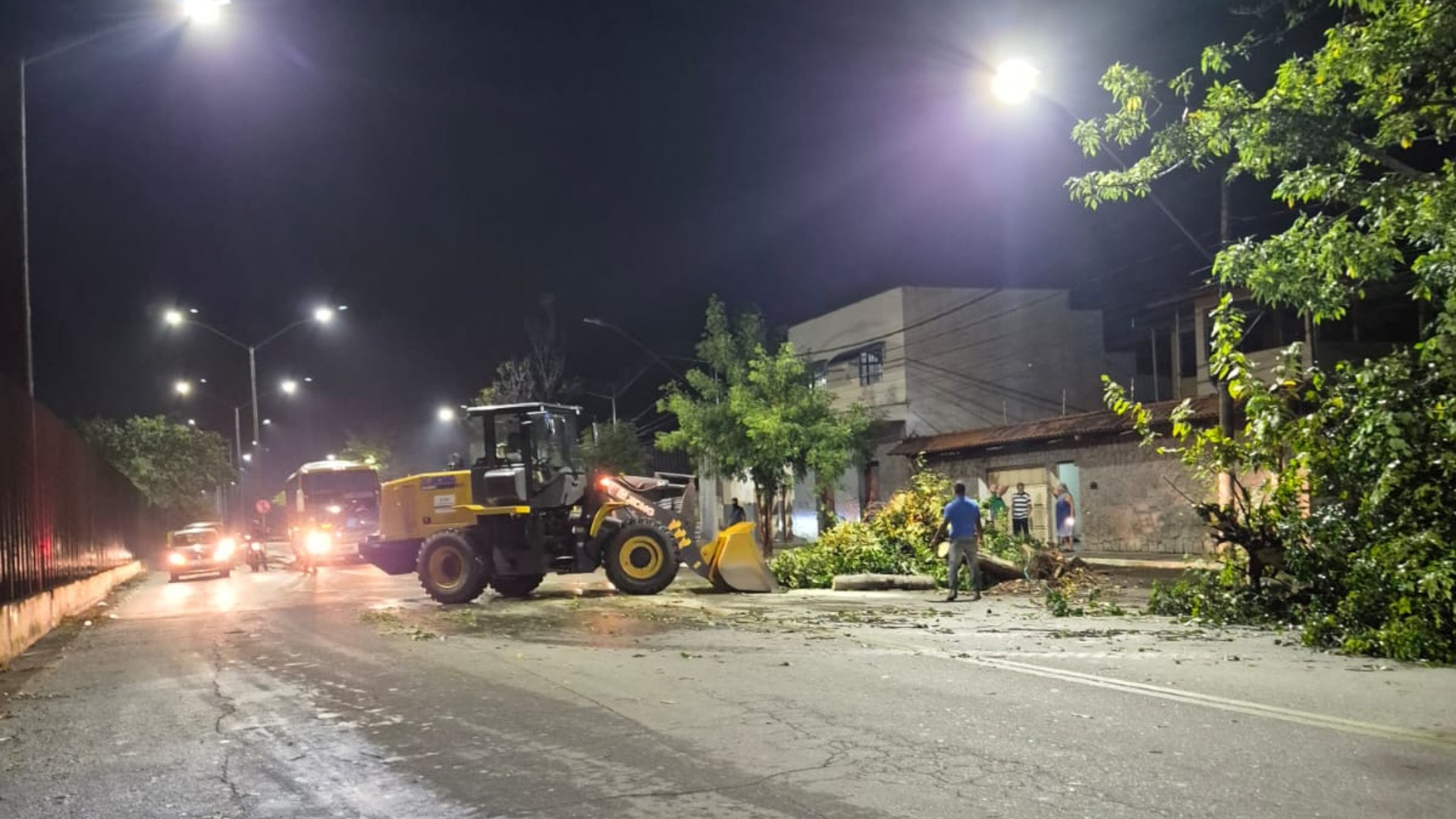
The Fire Department responded to eight incidents following a severe storm that hit Governador Valadares on Monday, April 13th. The majority of calls involved trees falling onto roads, properties, and electrical lines. Fortunately, no injuries were reported. Firefighter Aspirant Bruno Neiva stated that cleanup operations began immediately after the storm and continued through the night, prioritizing hazards to the public, such as blocked streets and downed power lines. One critical incident involved a fallen tree that collapsed a wall, trapping residents inside their home; firefighters cleared the debris to allow egress. Some tasks, particularly those requiring power to be shut off by the utility company for safety, were postponed to Tuesday, April 14th. Neiva explained that crews are addressing numerous fallen trees across the city, prioritizing based on risk and damage, with ongoing work expected until all incidents are resolved. The Fire Department advises residents against attempting to remove fallen trees themselves and to contact them immediately if a hazard is present. They also recommend avoiding areas near unstable trees, especially after storms. Meteorologist Ruibran Reis attributed the storm to a cold front that entered Minas Gerais on Sunday, April 12th, forming instability cells that caused intense rainfall in the Eastern and Northeastern regions. Overcast conditions are expected to persist in the Rio Doce, Jequitinhonha, and Mucuri valleys until Thursday, April 16th, due to Atlantic moisture, with a possibility of light showers on Tuesday. Cloud cover is predicted to decrease from Wednesday, April 15th, and temperatures will remain mild until Friday, April 17th, influenced by a polar air mass and cloudiness, before rising over the weekend.
The severe weather event in Governador Valadares highlights the critical infrastructure challenges posed by extreme weather, particularly the vulnerability of urban trees and electrical grids. The response efforts underscore the importance of coordinated emergency services and clear public safety advisories. Looking ahead, urban planning and utility management will need to increasingly integrate climate resilience strategies, anticipating more frequent and intense weather events. This includes proactive tree management programs, hardening electrical infrastructure, and developing robust early warning systems to mitigate risks and ensure public safety in the face of a changing climate.
AI-generated to prompt reflection — not editorial opinion, not advice, not a statement of fact. How this works.