Government Facilitates Over 8,000 Nepalis for Foreign Employment in One Year
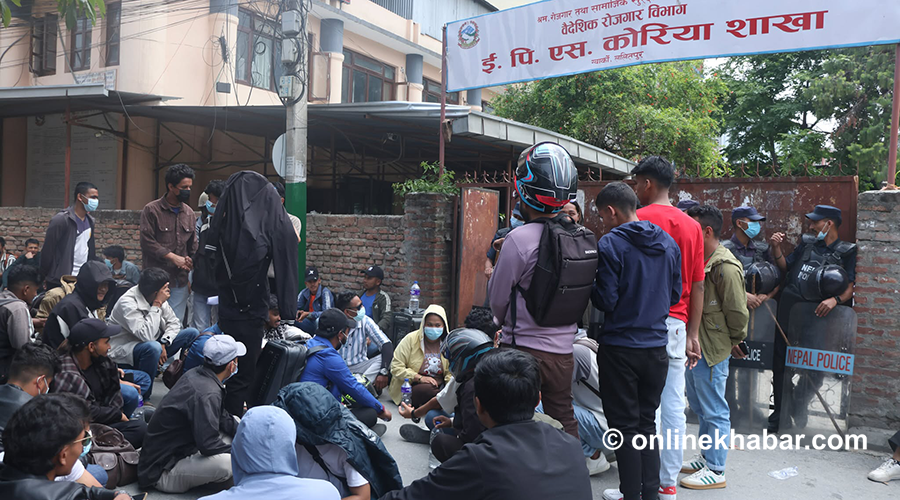
The Nepali government facilitated the departure of over 8,000 citizens for foreign employment during the last fiscal year, 2082/083. According to data from the Department of Foreign Employment, a total of 8,197 individuals were sent abroad under the G2G (Government-to-Government) scheme. The primary destinations for these workers were South Korea and Israel. Of the total number, 6,945 were male and 1,252 were female. This initiative highlights the government's role in managing and channeling labor migration through official channels. The G2G program aims to ensure safer and more regulated foreign employment opportunities for Nepali workers. The figures represent a significant number of individuals seeking economic opportunities abroad through government-supported pathways. Further details regarding the specific sectors and employment terms in South Korea and Israel were not provided in the initial report.
The Nepali government's facilitation of over 8,000 citizens for foreign employment through G2G schemes to South Korea and Israel underscores a strategic approach to labor migration management. This model, emphasizing government-to-government agreements, aims to mitigate risks associated with private recruitment agencies, potentially offering greater worker protection and fair labor practices. The gender distribution indicates a higher proportion of male workers, a trend common in many labor-exporting nations, though the significant number of female workers is also noteworthy. Looking ahead, the sustainability and scalability of G2G programs will be crucial, especially in the context of evolving global labor markets and the increasing demand for skilled and unskilled labor. Evaluating the long-term economic impact on both individuals and the national economy, alongside the effectiveness of these government-led channels in comparison to other migration pathways, will be key for future policy development.
AI-generated to prompt reflection — not editorial opinion, not advice, not a statement of fact. How this works.