Government Launches Strategic Plan to Combat Corruption Across Sectors
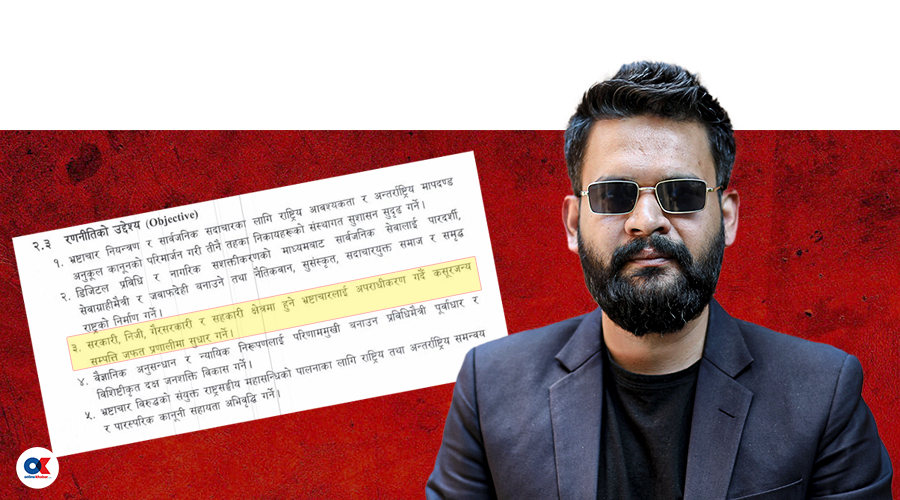
The current government in Nepal has introduced the second National Strategy to Combat Corruption, aiming to address corruption across public, private, non-governmental, and cooperative sectors. This initiative revives an earlier attempt by former Prime Minister K.P. Sharma Oli, who had sought to establish legal frameworks for the Commission for Investigation of Abuse of Authority (CIAA) to oversee corruption in all these domains. That previous effort, however, did not succeed in enacting the necessary legislation. The new strategic plan signifies a renewed commitment by the administration to tackle corruption comprehensively. It seeks to create a robust legal and institutional mechanism capable of investigating and prosecuting corrupt practices, regardless of where they occur. The plan underscores the government's recognition that corruption is not confined to the public sector but is a pervasive issue that requires a multi-faceted approach. By bringing private and non-governmental entities under the purview of anti-corruption efforts, the government hopes to foster greater transparency and accountability. This strategic plan is expected to guide the nation's anti-corruption endeavors for the coming years, building upon lessons learned from past attempts.
The government's renewed focus on a national anti-corruption strategy, encompassing both public and private sectors, reflects an understanding of corruption's systemic nature. Past legislative attempts highlight the complexities in expanding oversight bodies' mandates. The current strategy's success will likely hinge on its ability to navigate political will, bureaucratic inertia, and the vested interests that may resist greater transparency. In the context of Nepal's development trajectory and increasing integration into global economic systems, establishing robust anti-corruption mechanisms is crucial for fostering trust, attracting investment, and ensuring equitable resource distribution. The challenge lies in translating strategic intent into effective enforcement, creating accountability structures that are perceived as fair and impartial, thereby strengthening institutional legitimacy and promoting long-term stability.
AI-generated to prompt reflection — not editorial opinion, not advice, not a statement of fact. How this works.