Government's Plan to Hand Over Obsolete Factory to Army Faces Scrutiny
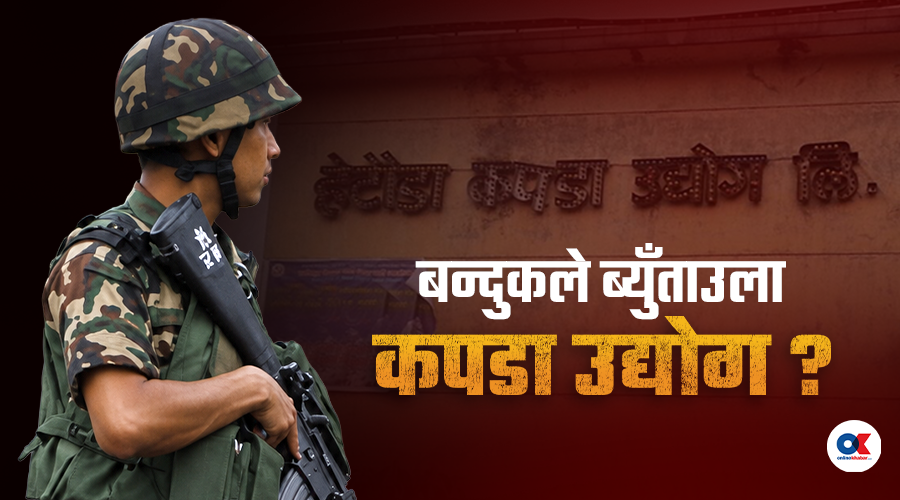
The Nepali government's decision to transfer the dilapidated Hetauda Cotton Industry to the Nepali Army is being questioned from political, military, and economic perspectives, with concerns about its practicality. The industry, which lacks proper records, is described as being in disrepair. The government's move to equip the army with this industry, along with scrap machinery, is intended to transform soldiers into industrialists. However, the economic viability of such a transfer is being debated. Critics argue that the state of the factory and the nature of the machinery provided make this initiative questionable. The underlying rationale for entrusting a defunct industrial unit to a military organization, especially one with no prior industrial record, is under examination. This plan raises significant questions about resource allocation and the government's strategy for industrial development and military modernization.
The government's initiative to transfer a defunct industrial asset to the military, ostensibly for industrial development, presents a complex case. From a systems perspective, allocating resources to an entity lacking established industrial expertise or infrastructure, especially for an asset with no prior operational records, suggests potential inefficiencies. The economic rationale requires careful examination, considering the costs of rehabilitation versus the potential returns, and whether this aligns with broader national industrial strategy or military readiness objectives. Evaluating the long-term implications of such a venture, particularly in the context of evolving economic landscapes and technological advancements, is crucial for sustainable development and effective resource management.
AI-generated to prompt reflection — not editorial opinion, not advice, not a statement of fact. How this works.