Government Strategy: Uniting Opposition or Exploiting Divisions?
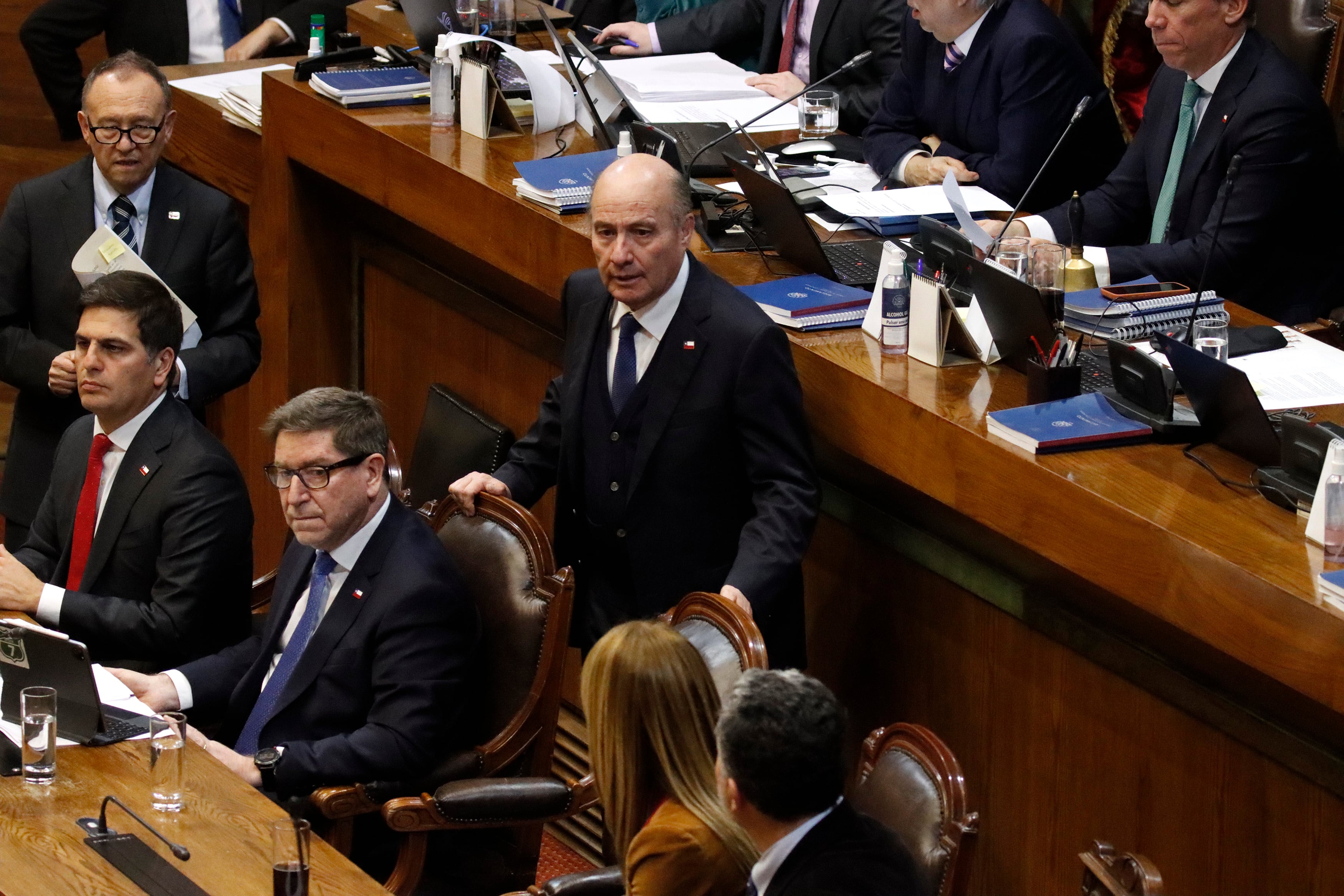
Following a pause in the debate on the National Reconstruction Law, the government is advised to reassess its strategy towards the opposition. Recent negotiations in the Senate revealed that dealing with each opposition party individually proved unsuccessful, leading to an impasse and undoing previous progress. An example of this was the negotiation over tax invariability periods with PPD senators, which was conducted without the knowledge of other center-left parties or even the PPD's own leadership. These failed talks ultimately confirmed the opposition's intent to appeal to the Constitutional Court, demonstrating that a 'divide and conquer' approach was ineffective.
However, the explanation for this failure is not solely attributed to the Executive's capabilities but also to the internal divisions within the opposition itself. These divisions stem from personal agendas, leadership conflicts, differing political projects, and calculations related to upcoming internal elections. Any one of these factors is sufficient to disrupt the horizontal coordination that ideally should link parties between elections. Consequently, individual or factional motivations tend to override collective interests.
This raises the question of what strategy the government should adopt when the legislative process resumes in August. While exploiting existing divisions might yield a tactical victory, it cannot substitute for building broad majorities. A government that relies solely on division may struggle to govern effectively.
The presented situation highlights a common governance challenge: the tension between achieving legislative goals through broad consensus versus exploiting existing political fragmentation. While a 'divide and conquer' strategy can offer short-term tactical advantages by weakening opposition unity, it risks alienating potential allies and undermining the legitimacy of the legislative process. Building durable majorities requires inclusive negotiation and a focus on shared objectives, rather than solely capitalizing on the internal discord of other political actors. In the long term, a government's ability to govern effectively is contingent on its capacity to foster cooperation and deliver on its mandate, which often necessitates transcending immediate political divisions to build a more cohesive political landscape.
AI-generated to prompt reflection — not editorial opinion, not advice, not a statement of fact. How this works.