Gran Corte's Integrated Production System Ensures Pork Quality from Farm to Table
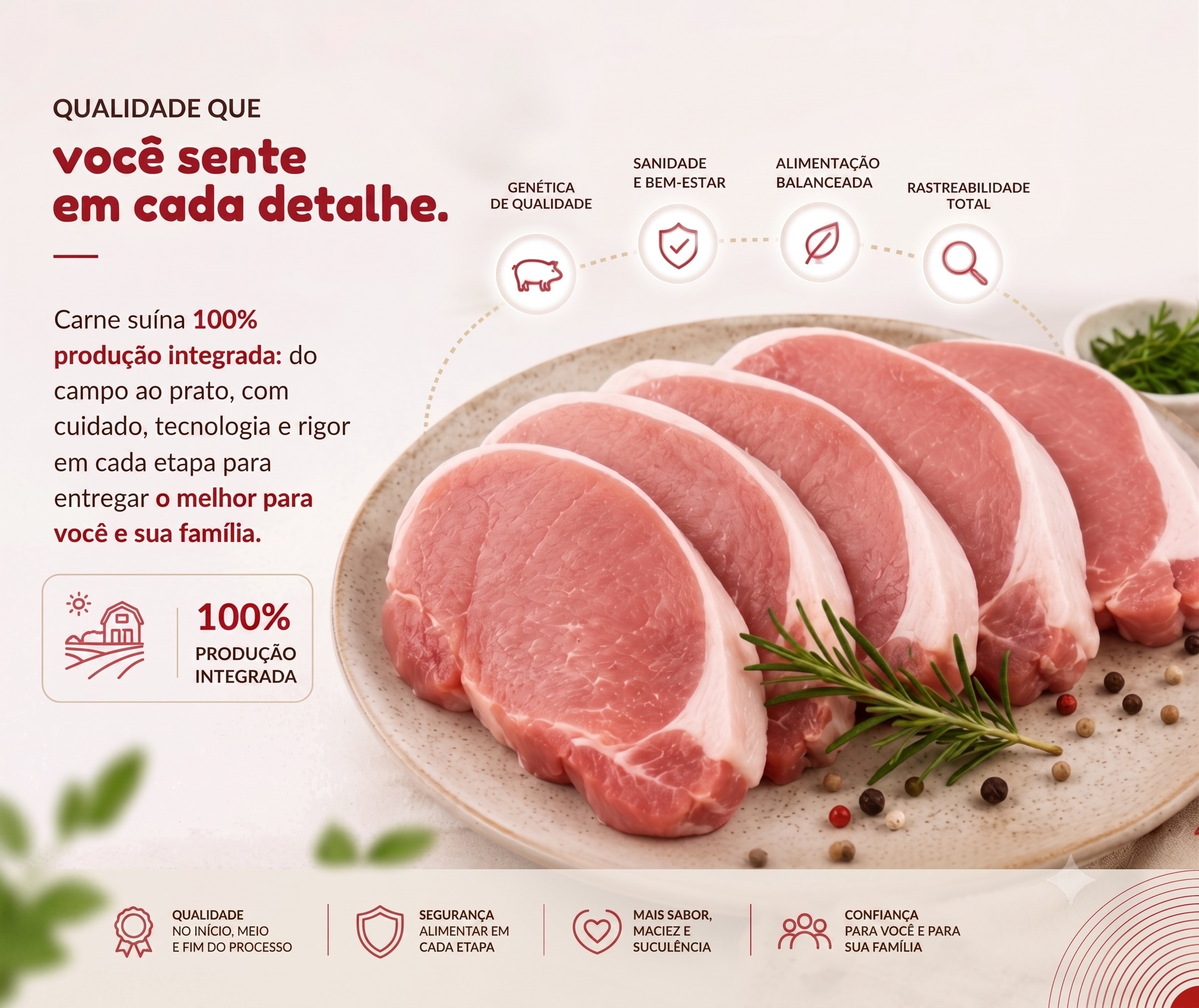
Gran Corte, a meatpacking company belonging to the Grupo Água Branca, distinguishes itself through an integrated production system that meticulously controls pork quality from animal birth to industrial processing. Unlike competitors sourcing from various suppliers, Gran Corte manages its entire supply chain, encompassing genetics, breeding farms, nurseries, finishing operations, and its own animal feed production, ensuring rigorous oversight at every stage. This comprehensive approach allows for the consistent development of quality attributes such as tenderness, yield, flavor, and cut standardization.
Traceability is a cornerstone of Gran Corte's operation, with detailed records maintained throughout each animal's life, including genetic origin, health history, feeding, management practices, veterinary care, and transport details. This information provides transparency and assurance to the company, regulatory bodies, and consumers. The processing facility adheres to Good Manufacturing Practices, self-control programs, and continuous sanitary inspections, operating under the Federal Inspection Service (SIF) standards. This integration allows Gran Corte to offer a highly uniform product, benefiting consumers, butchers, supermarkets, and industries with predictable yield and consistent presentation. The company emphasizes that food safety is built daily through investments in biosecurity, animal nutrition, veterinary support, technology, animal welfare, and process monitoring, reinforcing its commitment to delivering trustworthy, high-standard pork to Brazilian consumers.
Gran Corte's integrated production model highlights a strategic approach to supply chain control, aiming to mitigate variability and enhance product consistency. By internalizing key stages from genetics to processing, the company seeks to build brand trust through demonstrable quality and safety standards, such as SIF certification and detailed traceability. This vertical integration allows for greater predictability in product characteristics, which can be a significant competitive advantage in the food industry. However, the inherent complexity and capital investment required for such a model present ongoing challenges related to operational efficiency and adaptability to market shifts. Future success may depend on leveraging data analytics from their integrated system to further optimize animal husbandry, feed formulations, and processing efficiency, while also maintaining agility to respond to evolving consumer preferences and regulatory landscapes.
AI-generated to prompt reflection — not editorial opinion, not advice, not a statement of fact. How this works.