Great Apes Use Affection to Prevent Conflict, Study Finds
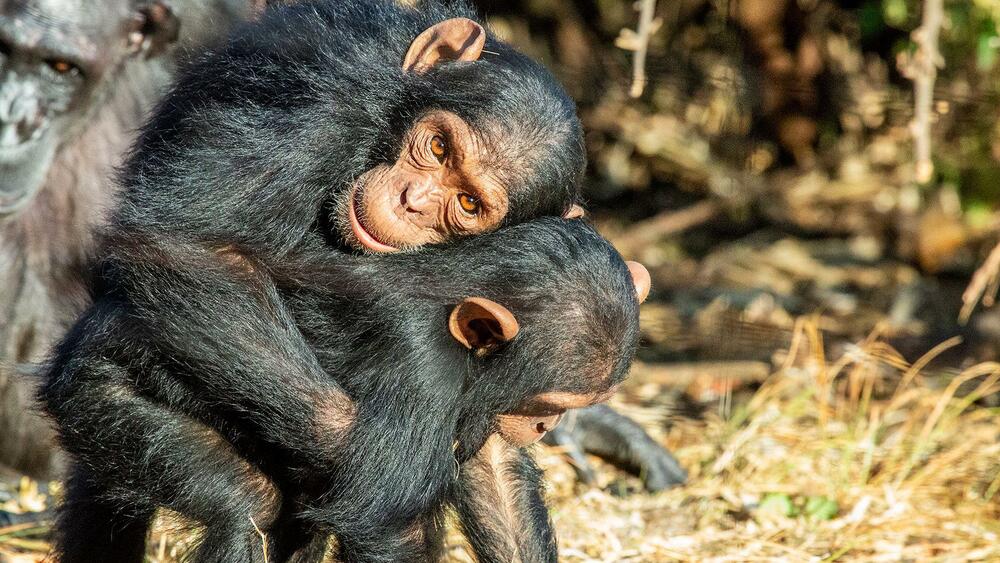
Scientists from Durham University have conducted research into how chimpanzees and bonobos utilize physical contact to foster security and support among themselves. This behavior is observed particularly in the moments leading up to potential conflicts over resources, such as food. The study suggests that these great apes engage in actions like kissing and embracing as a mechanism to de-escalate tension and maintain social harmony within their groups. By employing these affiliative behaviors, the apes appear to preemptively address the potential for aggression. This research sheds light on the complex social dynamics and conflict resolution strategies employed by our closest living relatives. The findings indicate that physical affection plays a crucial role in the social structure and stability of chimpanzee and bonobo communities. Understanding these behaviors can offer insights into the evolutionary roots of social bonding and peace-making.
This study highlights how non-human primates employ social bonding mechanisms, akin to affection, to mitigate conflict over resources. Such behaviors suggest that the evolutionary trajectory of social species may favor cooperative strategies that preemptively reduce competition's negative externalities. Examining these ape societies through the lens of future AI-driven resource management and social organization could reveal universal principles of group cohesion and conflict avoidance. Understanding these deep-seated, non-verbal communication systems offers a valuable counterpoint to purely rational or transactional models of social interaction, underscoring the enduring importance of social-emotional regulation in maintaining group stability.
AI-generated to prompt reflection — not editorial opinion, not advice, not a statement of fact. How this works.