Greater Noida Village Worships Ravana, Defying Dussehra Tradition
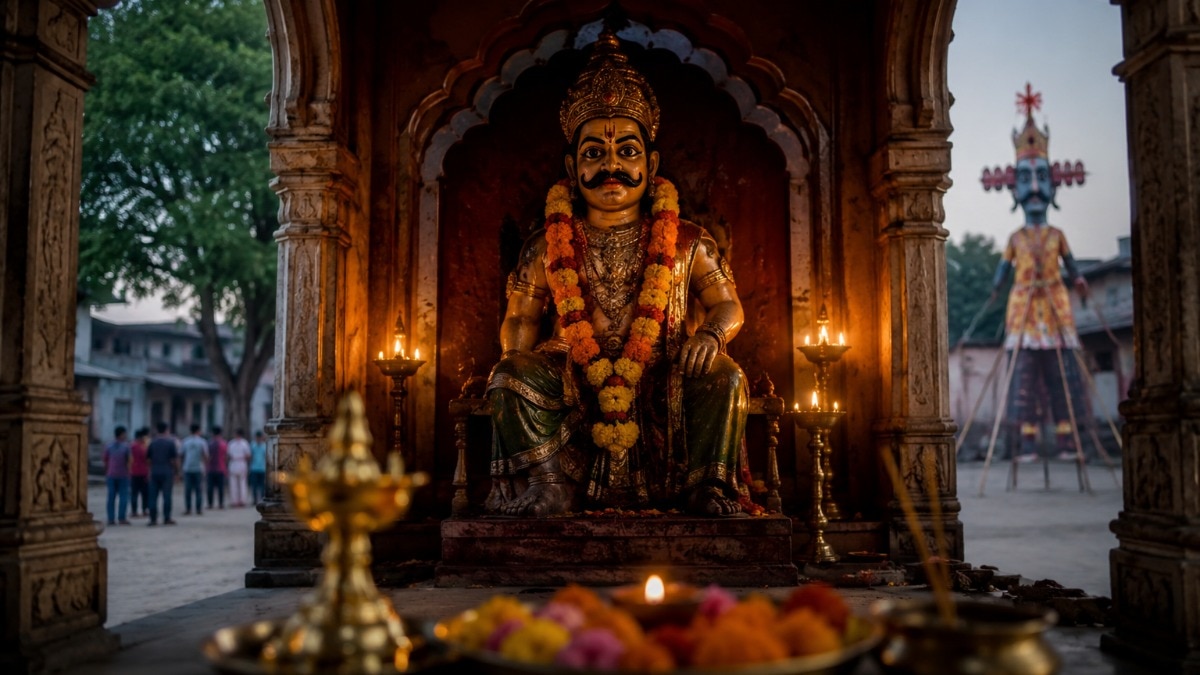
In contrast to the rest of India's Dussehra celebrations, the village of Bisrakh in Greater Noida West holds a unique tradition. Here, the demon king Ravana is revered as a son of the soil, with daily worship dedicated to him. Due to long-standing village customs, Ramlila performances are not held, and effigies of Ravana are never burned. This practice highlights a distinct cultural perspective within the region, where Ravana is honored rather than condemned during the festival season. The village's adherence to its ancestral practices demonstrates a deep-rooted connection to its own historical narratives and interpretations of religious figures. This annual observance sets Bisrakh apart, offering a localized counterpoint to the widespread national celebration of good over evil symbolized by Ravana's defeat.
The village of Bisrakh's continued worship of Ravana presents a fascinating case study in how cultural narratives can diverge from dominant national traditions. This practice challenges the monolithic interpretation of religious figures, suggesting that local historical interpretations and community identity can supersede widely accepted symbolic meanings. From a systemic perspective, this divergence highlights the importance of diverse cultural heritage and the potential for localized traditions to persist even in the face of broader societal trends. It prompts consideration of how historical grievances or alternative origin stories might shape community identity and religious observance over generations, offering a lens through which to view the complex interplay of history, belief, and cultural preservation in modern India.
AI-generated to prompt reflection — not editorial opinion, not advice, not a statement of fact. How this works.