Greece Battles Wildfires: Evacuations in Athens Area, Island Blazes Continue
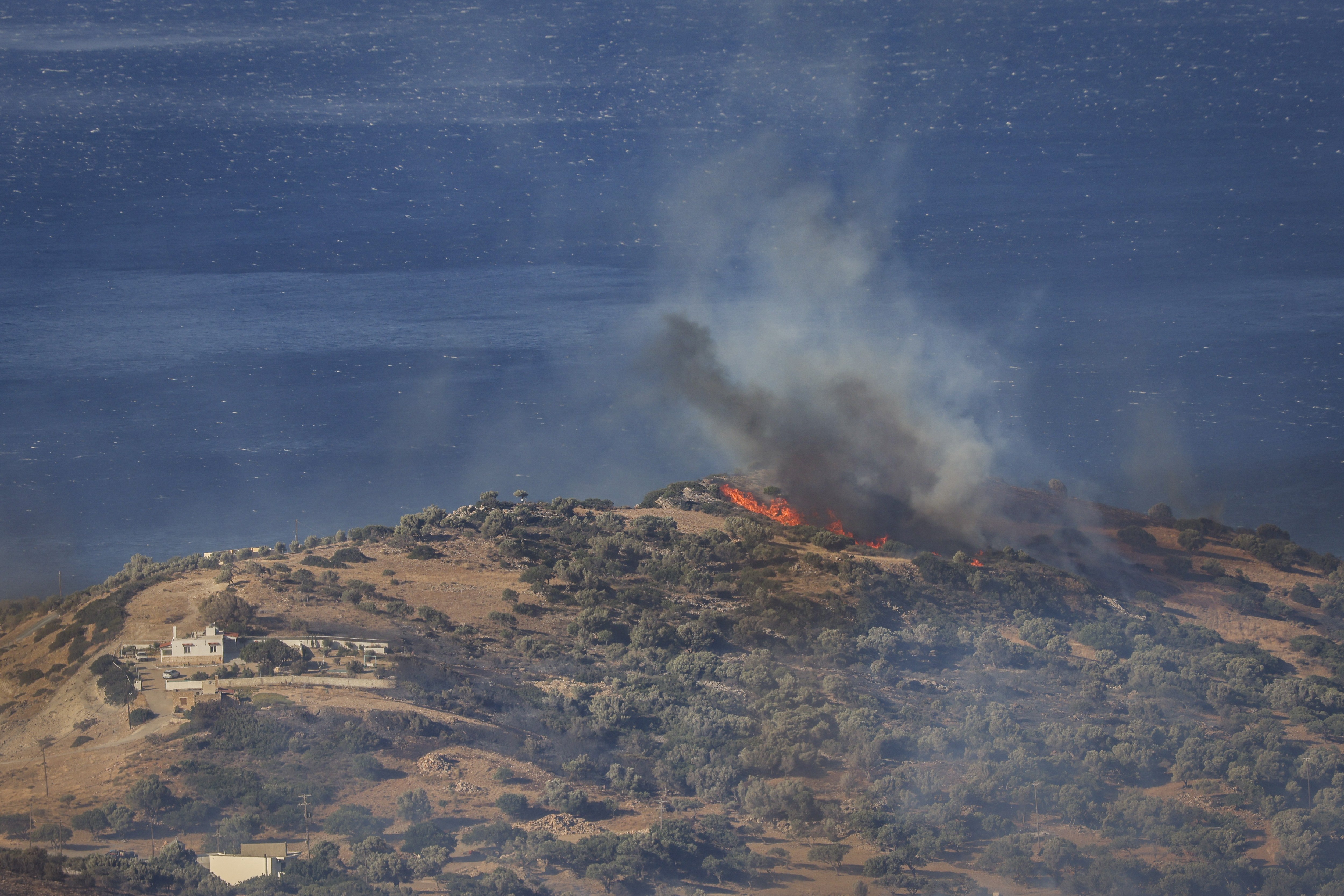
Wildfires are spreading across Greece, reaching areas near the capital, Athens, on Friday, July 31. Authorities issued a precautionary evacuation order for parts of the Chaidari neighborhood in the Athens metropolitan area, located 11 km from the city center, due to the proximity of homes to the fire's edge. Over 100 firefighters, supported by four water-bombing planes and five helicopters, were deployed to combat the blaze in Chaidari. The local mayor stated that residents faced significant risk, but firefighters managed to bring the flames under control, allowing most residents to return home. The country has experienced a continuous wave of fires this week, with firefighters recording 51 new outbreaks in the preceding 24 hours. Fires have also impacted the Cycladic island of Paros and various parts of Crete. In Agia Galini, southern Crete, an estimated 8,000 people, including tourists and residents, were temporarily evacuated. A local café owner, Thrasyvoulos Paterakis, 69, reported losing his establishment, his family's primary income source, to the fires. Another substantial fire in northern Crete consumed approximately 4,500 hectares, with firefighters working to contain remaining hotspots despite improved conditions. The fires are part of a broader pattern affecting Southern Europe, with ongoing efforts in Turkey to control blazes near Cine and in France where a major fire in Gironde, though stabilized, damaged nearly 240 homes and displaced over 220,000 people. A new fire in southeastern France's Var region prompted the evacuation of 2,500 people and burned about 1,000 hectares. Spain has ended its state of emergency near Madrid but maintains a high alert due to extreme heat forecasts. In Portugal, nearly 1,000 firefighters are battling a fire in Valpaços that has destroyed at least 6,000 hectares since the week began, with another fire active in nearby Chaves. Central Europe anticipates temperatures up to 41°C, exacerbating dry conditions and increasing the risk of new fires, while straining water and energy systems. Experts link the escalating frequency of such events to climate change.
The widespread wildfires across Greece and other Southern European nations highlight the increasing vulnerability of these regions to extreme weather events, a trend widely attributed by experts to climate change. The scale of evacuations, property destruction, and the strain on emergency services underscore the systemic challenges posed by such phenomena. While immediate responses focus on containment and resident safety, the recurring nature of these fires necessitates a long-term strategic re-evaluation of land management, urban planning near fire-prone areas, and robust climate adaptation measures. The economic impact, exemplified by the loss of livelihoods like Thrasyvoulos Paterakis's café, points to the broader societal consequences that require integrated policy solutions beyond immediate disaster relief. Future preparedness will likely involve enhanced early warning systems, investments in resilient infrastructure, and international cooperation to address a shared environmental threat.
AI-generated to prompt reflection — not editorial opinion, not advice, not a statement of fact. How this works.