Greece's Public Discourse Erodes Norms of Acceptable Behavior
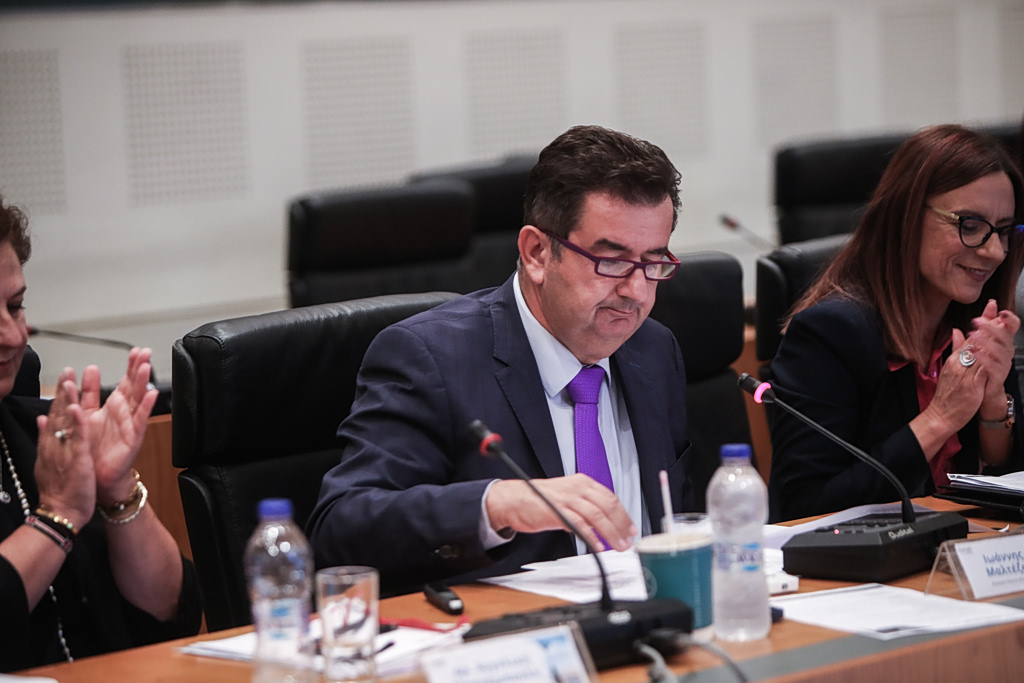
Greece's public life has witnessed a significant shift in what is considered acceptable, with barbarism now normalized. The boundary between the unthinkable and the tolerable has not just moved but has been entirely dismantled. While the former right-hand man of the Prime Minister, known for his coarse language and demeanor, is set aside for now, the broader trend indicates a deep erosion of public discourse standards. This normalization of harsh and unacceptable behavior reflects a concerning trend in the country's civic engagement. The article suggests that this shift is not a minor adjustment but a fundamental change in societal norms. It implies a need to address the underlying causes of this 'de-barbarization' of public life. The implications of this normalization extend to political discourse and public interaction, potentially fostering an environment where civility is increasingly disregarded. The piece calls for a re-evaluation of these evolving standards and their impact on democratic dialogue.
The normalization of previously unacceptable discourse in Greece's public sphere suggests a potential shift in societal tolerance thresholds, possibly driven by prolonged exposure to contentious rhetoric or a perceived breakdown in traditional gatekeepers of public debate. This phenomenon warrants examination through the lens of communication theory and political science, exploring how evolving media landscapes and political strategies might contribute to the erosion of civility. Understanding the systemic incentives that reward inflammatory language over reasoned argument is crucial. The long-term implications for democratic deliberation and social cohesion, particularly in the context of an increasingly polarized global environment, merit careful consideration, prompting a focus on fostering more constructive public dialogue.
AI-generated to prompt reflection — not editorial opinion, not advice, not a statement of fact. How this works.