Greece to Pay Fishermen for Culling Invasive Poisonous Pufferfish
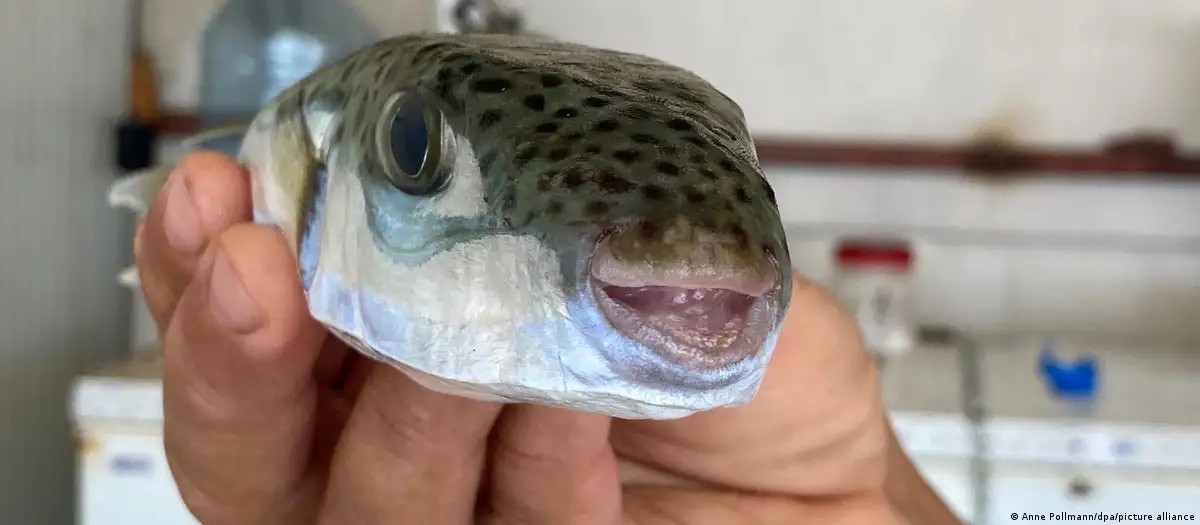
The Greek government has announced a new initiative to pay fishermen up to 5.33 euros per kilogram for capturing the invasive and poisonous pufferfish species, Lagocephalus sceleratus. This species, native to the Indian and Pacific Oceans, entered the Mediterranean Sea via the Suez Canal and was first identified in Greece in 2005. Its population has since exploded, particularly in the southern Aegean Sea, where it lacks natural predators. The pufferfish, known locally as "hare-head" due to its distinctive teeth, can grow up to 13 kilograms. Its skin and organs contain tetrodotoxin, a potent neurotoxin lethal to humans, and there have been instances of swimmers being bitten. Beyond its toxicity, the fish poses a significant threat to the fishing industry by consuming commercially valuable fish and damaging fishing gear like nets and longlines. Icthyologist Paraskevi Karajlé described the species as aggressive with strong jaws and teeth, exacerbating the damage to equipment as it attempts to feed within nets. Greek Minister of Agriculture and Fisheries, Margaritis Schinás, highlighted that climate change and invasive species, including this pufferfish, are major threats to Greek fisheries. Captured fish will be frozen and incinerated by local authorities. Cyprus has a similar program that pays approximately 4.73 euros per kilogram, having paid out around 487,000 euros since its June 2024 launch and resulting in the capture of nearly 103,000 kg of the invasive species. Greek fishermen are experiencing severe economic hardship due to the fish, with some reporting daily catches of 100-200 specimens that destroy their equipment and catch valuable fish. Despite the impact on fishermen, authorities assure the public that the pufferfish has not been sighted in tourist swimming areas and poses no imminent danger to bathers, with medical and tourism associations cautioning against public overreaction.
Greece's incentive program for pufferfish removal addresses an ecological and economic imbalance caused by an invasive species. By assigning a monetary value to the removal of Lagocephalus sceleratus, the government aims to mitigate damage to fishing infrastructure and ecosystems, while also potentially creating a new revenue stream for fishermen. This approach reflects a pragmatic response to environmental challenges, leveraging market-based mechanisms to achieve conservation goals. However, the long-term sustainability of such programs, including potential unintended consequences like overfishing or market distortions, warrants careful monitoring. The initiative also highlights the broader challenge of managing invasive species in interconnected marine environments, a problem likely to intensify with climate change and global trade, necessitating adaptive and potentially collaborative international strategies.
AI-generated to prompt reflection — not editorial opinion, not advice, not a statement of fact. How this works.