Greece Wildfires Expand, Causing Widespread Destruction and Fatalities
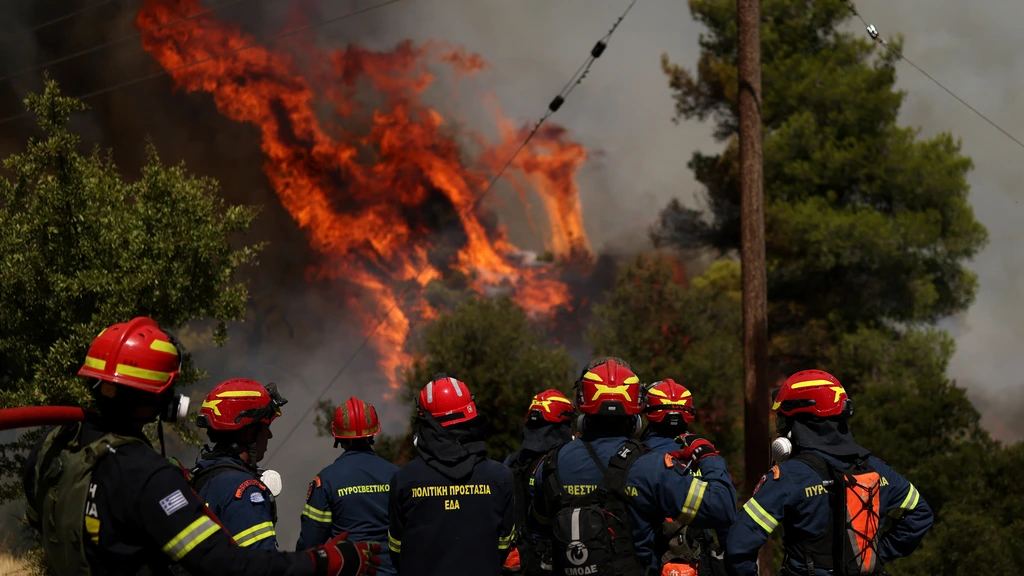
Wildfires are intensifying across Greece, with an estimated 12,000 hectares of forest and agricultural land already destroyed, an area more than double the size of De Hoge Veluwe National Park. Several blazes are raging northwest of the capital, Athens, where the Greater Athens region is under the second-highest wildfire warning. High winds throughout Greece are accelerating the fires' spread and hindering firefighting efforts, with turbulence even preventing water drops from firefighting planes in some instances. Prime Minister Kyriakos Mitsotakis described the situation as "extreme weather conditions," noting wind speeds reaching force 10 and gusts of 100 kilometers per hour. He acknowledged that the intensity of these natural phenomena can overwhelm human planning and operational capacity. Tragically, three Greek firefighters have lost their lives due to the blazes. One of the largest fires began Friday in Boeotia, near the popular resort of Porto Germeno on the Gulf of Corinth, and spread westward into Attica. Local authorities report dozens of homes damaged or destroyed in Porto Germeno and surrounding villages, while firefighters work to prevent the fire from reaching Athens' western suburbs. The public broadcaster ERT describes the fire in Veniza as "uncontrollable" and spreading "with the speed of a flamethrower," prompting evacuation orders for residents to move northeast. Researcher Theodore Giannaros estimates the Porto Germeno fire alone has affected over 10,000 hectares, potentially classifying it as a "mega-fire." Nearly 500 firefighters and 39 water-bombing aircraft are deployed around Athens, with additional efforts underway against two fires on the Peloponnese peninsula and blazes on the islands of Crete, Paros, and Kefalonia.
The current Greek wildfires highlight the escalating challenge of managing extreme weather events exacerbated by climate change. The intensity and rapid spread, even overwhelming aerial firefighting capabilities due to severe turbulence, underscore the need for adaptive strategies beyond conventional response. While human efforts are commendable, the scale of destruction suggests a systemic vulnerability to meteorological extremes. Future planning must integrate advanced predictive modeling and potentially re-evaluate land use and infrastructure in high-risk zones. The loss of life among firefighters necessitates a critical look at operational safety protocols in the face of unprecedented environmental conditions. This situation serves as a stark reminder of the increasing frequency and severity of climate-related disasters, prompting a broader discussion on long-term resilience and mitigation investments.
AI-generated to prompt reflection — not editorial opinion, not advice, not a statement of fact. How this works.