Greek Election Campaigns Shift Focus from Broad Appeal to Niche Targeting
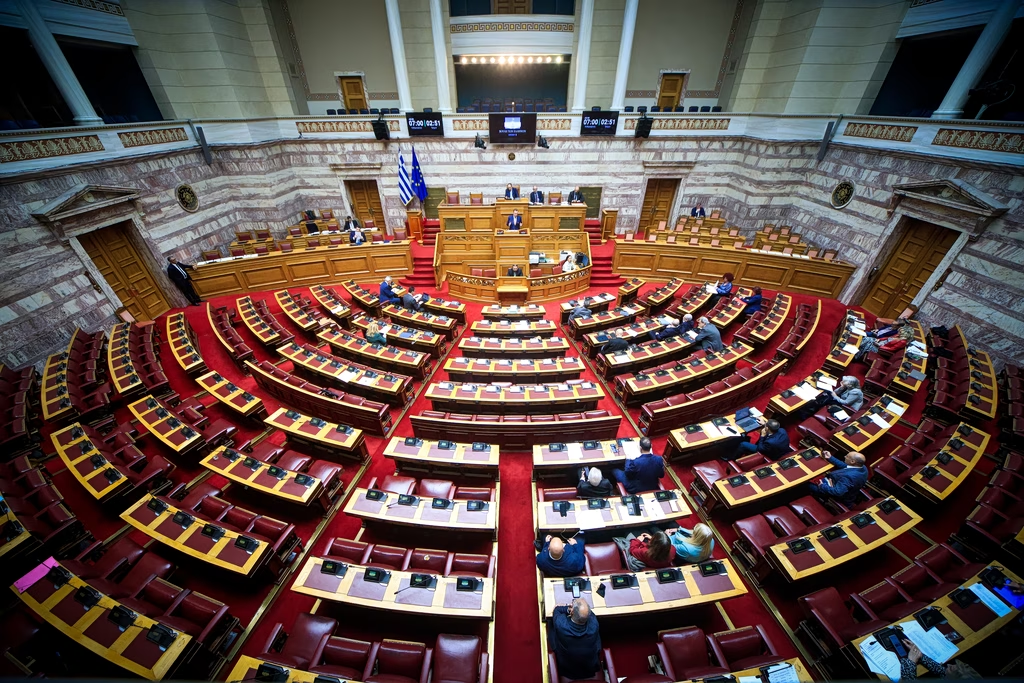
The current election campaign in Greece has introduced a notable shift in strategy compared to previous years. Historically, political parties and their leaders aimed to appeal to the broadest possible segment of the electorate. Their objective was to integrate as many voters as possible into their potential voter base, employing rhetoric and slogans designed for wide acceptance. This approach sought to maximize outreach and capture a larger share of the vote by addressing a diverse range of concerns and interests. However, the evolving political landscape appears to be prompting a reevaluation of this traditional method. The new characteristic of the ongoing campaign suggests a departure from seeking universal appeal. Instead, parties may be opting for more targeted messaging, potentially focusing on specific demographics or ideological groups. This strategic pivot could indicate a recognition that mobilizing a dedicated core of supporters is now a more viable path to electoral success than attempting to persuade a wider, more fragmented audience. The effectiveness of this new approach remains to be seen as the campaign unfolds.
The observed shift in Greek election campaign strategies from broad appeal to niche targeting reflects a broader trend in political communication, driven by evolving voter demographics and the fragmentation of media landscapes. This approach may stem from an analysis of electoral data suggesting that mobilizing a committed base is more efficient than attempting to persuade undecided or disengaged voters. Such a strategy, while potentially increasing turnout among core supporters, risks alienating moderate voters or those who feel unrepresented by narrowly focused platforms. It also raises questions about the long-term health of democratic discourse, as it can exacerbate political polarization and reduce the common ground necessary for effective governance. Future campaigns may need to balance targeted mobilization with inclusive messaging to foster broader societal cohesion.
AI-generated to prompt reflection — not editorial opinion, not advice, not a statement of fact. How this works.