Greek Government Shifts Focus to Targeted Audiences
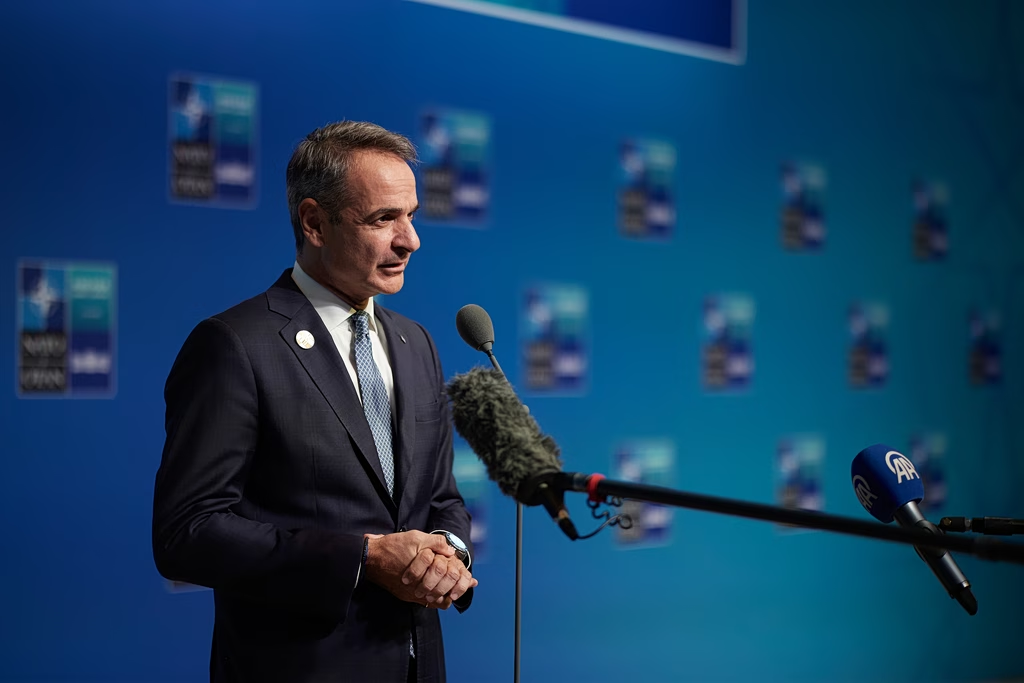
The Greek government is reportedly planning its next moves with a focus on specific target audiences. This strategic shift suggests a potential recalibration of its communication and policy outreach efforts. The political climate among members of the ruling party, referred to as "blue" cadres, is described as tense. This tension may stem from internal disagreements or external pressures related to the government's current direction and future plans. The government's decision to target specific demographics indicates a desire to refine its messaging and connect more effectively with particular segments of the population. Further details on the exact nature of these target audiences and the planned initiatives are not yet available. However, the move implies a move away from broader, general appeals towards more tailored approaches. The reported tension within the party's ranks could influence the implementation and reception of these new strategies. Observers are watching closely to see how these targeted efforts will unfold and what impact they will have on the political landscape.
The Greek government's apparent pivot towards targeted audiences suggests a strategic response to evolving public sentiment and electoral dynamics. This approach, common in political maneuvering, aims to maximize impact by tailoring messages to specific demographic or ideological groups, potentially increasing engagement and support. The reported tension among ruling party cadres may reflect internal debates about the efficacy of current strategies or anxieties regarding future electoral performance. Such internal friction can either galvanize a party towards greater focus or lead to fragmentation, depending on leadership and the nature of the disagreements. From a systems perspective, this move could be interpreted as an attempt to optimize resource allocation in communication and policy dissemination, prioritizing segments deemed most receptive or influential. The long-term implications will depend on whether these targeted efforts foster genuine connection or are perceived as manipulative, and how they navigate the broader societal trends of the coming decade, including digital polarization and the demand for authentic representation.
AI-generated to prompt reflection — not editorial opinion, not advice, not a statement of fact. How this works.