Greek Prosecutor Recommends Special Court for Tempi Cover-Up
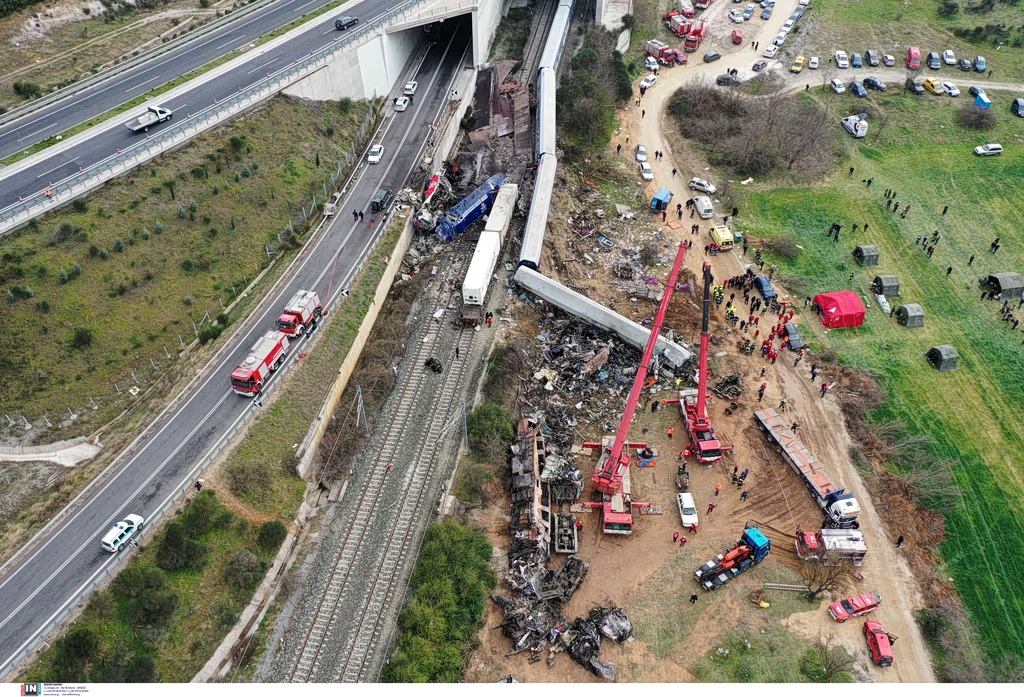
The Greek prosecutor has proposed the establishment of a Special Court to investigate the alleged cover-up related to the Tempi train disaster. This recommendation specifically targets the potential involvement of government officials in concealing evidence or obstructing the investigation. The prosecutor has indicated that two key figures, Christos Triantopoulos and Kostas Agorastos, should be referred for trial by this special court. Triantopoulos previously served as Deputy Minister of Infrastructure and Transport, a role that placed him in a position of authority over matters related to the railway network. Agorastos held the position of Regional Governor of Thessaly, the administrative region where the tragic accident occurred. The term "μπάζωμα" (bázoma) in Greek implies an act of covering up or burying evidence, suggesting that the prosecutor believes there was a deliberate effort to hide crucial information following the disaster. This development signifies a significant step in the ongoing legal proceedings surrounding the Tempi incident, which resulted in a substantial loss of life and widespread public outcry for accountability. The Special Court, if convened, would have the jurisdiction to try high-ranking officials, indicating the gravity with which the prosecutor views the alleged cover-up.
The prosecutor's call for a Special Court to investigate the Tempi disaster's alleged cover-up highlights a critical juncture in Greek legal and political accountability. This move suggests a potential disconnect between the executive branch's handling of the aftermath and the judicial system's pursuit of truth. Examining the incentive structures for public officials in disaster management and information dissemination is crucial. The establishment of such a court, if realized, could signal a strengthened commitment to transparency, yet it also raises questions about the independence of investigations when high-ranking officials are implicated. The long-term implications involve public trust in governance and the effectiveness of legal mechanisms in preventing future incidents and ensuring accountability in the face of systemic failures.
AI-generated to prompt reflection — not editorial opinion, not advice, not a statement of fact. How this works.