Greek Railway Safety: Automatic Brakes "Functional" But Non-Operational, Network Has "Dead Spots" Three Years After Tempi
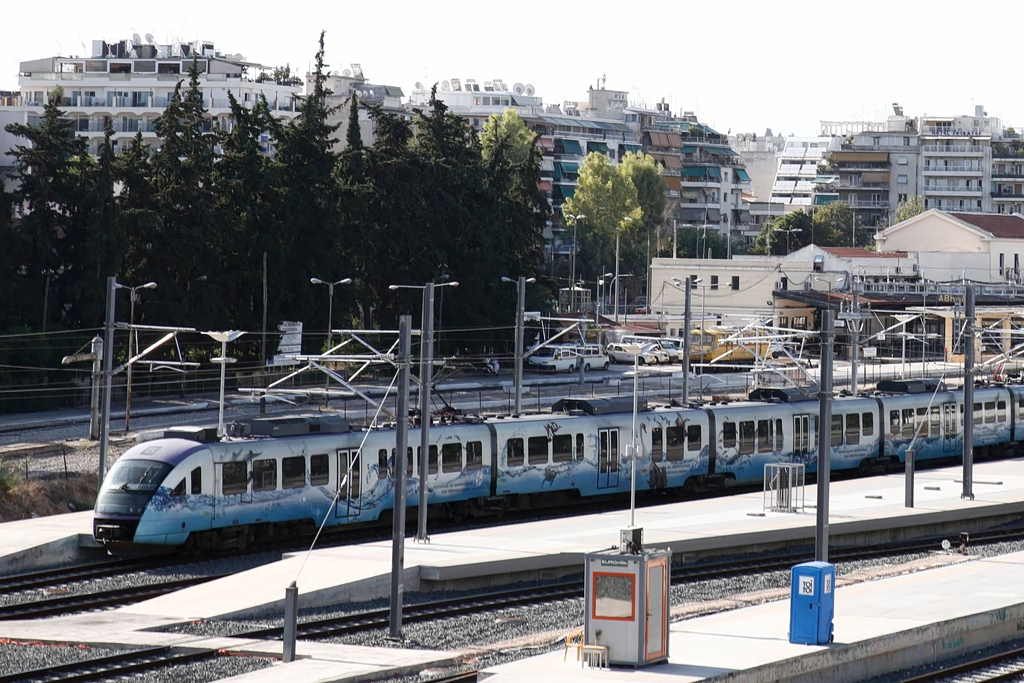
Christos Paliou's admission that the ETCS (European Train Control System) is not functioning has reignited concerns about the safety of the Greek railway network. This statement highlights a critical issue three years after the tragic Tempi train disaster. The ETCS is designed to provide automatic braking and ensure train safety, but its current state of non-operation means the system is not fulfilling its intended purpose. Furthermore, the railway network is reported to have "dead spots," areas where signaling and communication systems are unreliable or completely absent. These deficiencies pose significant risks to train operations and passenger safety. The failure of the ETCS to be operational, coupled with the existence of these dead spots, raises serious questions about the implementation and effectiveness of safety upgrades on the Greek railways. The situation underscores a persistent gap between stated safety protocols and their practical application. Authorities are under pressure to address these systemic issues to prevent future accidents.
The acknowledgment of the ETCS's non-operational status on Greek railways, despite being deemed "functional," points to a potential disconnect between regulatory compliance and actual system readiness. This situation, occurring years after a major accident, suggests that systemic implementation challenges may persist, impacting the reliability of critical safety infrastructure. The presence of "dead spots" further indicates vulnerabilities in network coverage and communication, which are essential for modern train control systems. Addressing these issues requires a comprehensive review of project management, oversight, and the integration of technology to ensure that safety systems are not only technically capable but also fully deployed and operational across the entire network. Future investments should prioritize robust testing and validation protocols to bridge the gap between declared functionality and real-world performance, thereby enhancing overall network resilience and public trust.
AI-generated to prompt reflection — not editorial opinion, not advice, not a statement of fact. How this works.