Guide Removes Hook From Pirarara Fish's Stomach in Tocantins, Brazil
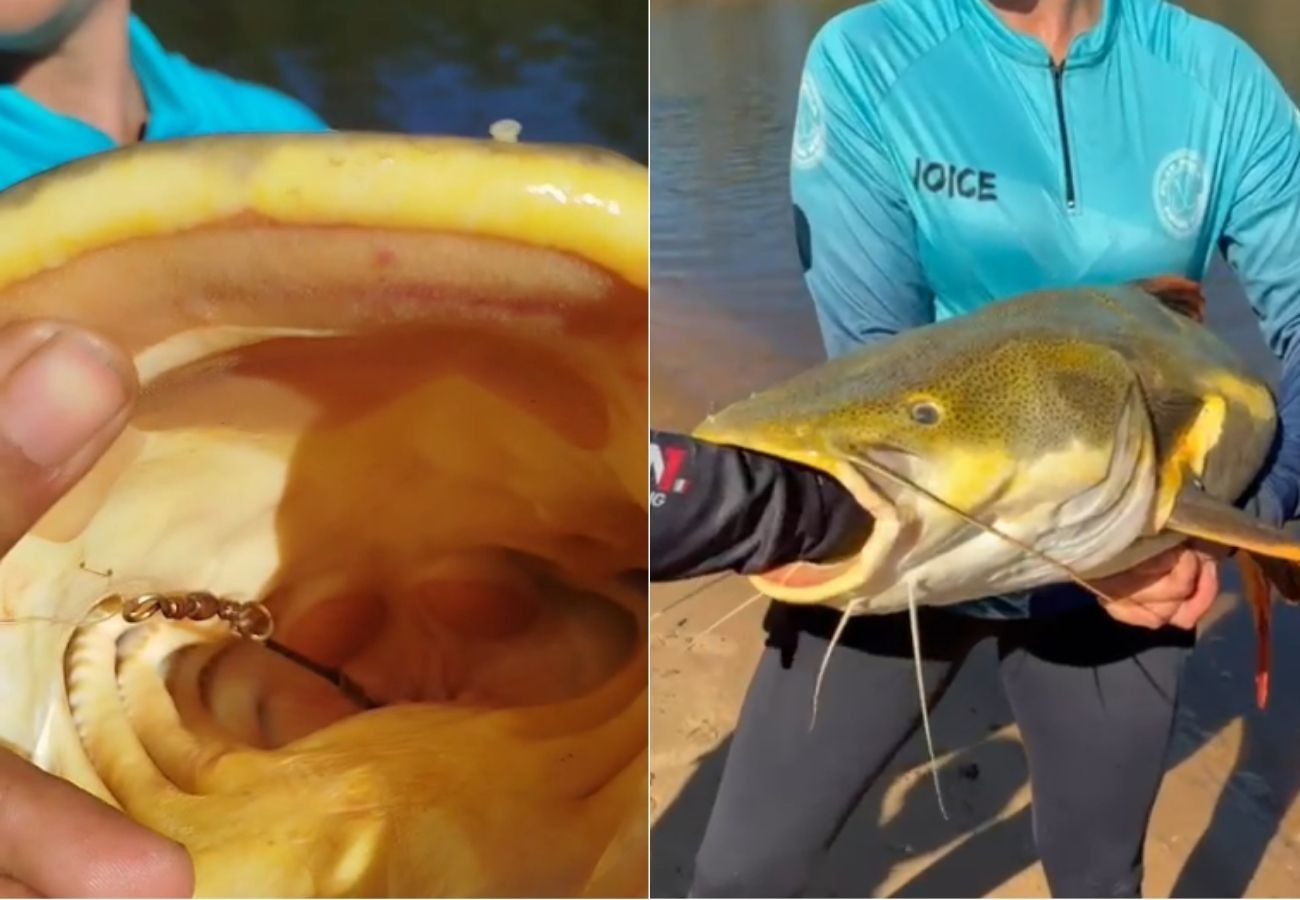
In Formoso do Araguaia, Tocantins, Brazil, a group of sport fishermen encountered a pirarara fish with a fishing hook lodged in its stomach. The fish, measuring approximately 1.20 meters and weighing around 30 kg, had apparently swallowed the hook after a fishing line broke. Guide Ubiratan de Brito Fragoso, who was leading the São Paulo group on his property along the Formoso River, skillfully removed the hook by reaching into the fish's stomach. Fragoso explained that this often happens with pirararas, which tend to swallow hooks, and he was accustomed to such procedures. He detailed how he manipulated the hook to extract it safely. The fishing line and hook were believed to have been left by other anglers, with the line breaking and the fish escaping before it could be rescued. The pirarara species is known in the region and can grow over two meters and 100 kg. After the successful removal of the hook, Joiceline Leme, also present, held the fish before releasing it back into the river. Fragoso noted that while he used his bare hand, using a rubber glove is recommended to prevent bacterial infections from the fish's mouth, which has serrations instead of teeth used for consuming prey.
This incident highlights the unintended consequences of recreational fishing practices and the importance of responsible angling. While the quick thinking and intervention by the guide successfully saved the pirarara, it underscores a recurring issue where discarded or broken fishing gear poses a significant threat to aquatic wildlife. The practice of sport fishing, while often promoting conservation awareness, can inadvertently lead to such entanglement and ingestion scenarios. Future considerations for the sport fishing community could include enhanced education on proper gear management and the development of more biodegradable or easily removable tackle to mitigate harm to fish populations. This event serves as a reminder of the delicate balance between human recreational activities and the preservation of natural ecosystems.
AI-generated to prompt reflection — not editorial opinion, not advice, not a statement of fact. How this works.