Gulf Arab States: Winners or Losers in US-Iran Understanding?
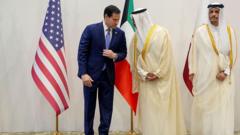
A recent understanding between the United States and Iran has raised significant questions about the potential implications for the Gulf Arab states. The central query is whether these nations stand to lose from this developing accord or if they have narrowly avoided greater potential harm with its cessation of hostilities. The situation prompts a strategic re-evaluation of regional dynamics and the geopolitical landscape. The nature and extent of this understanding remain a key focus for regional observers and policymakers alike. Further details on the specific terms and commitments of the US-Iran agreement are crucial for a comprehensive assessment of its impact. The economic and security ramifications for the Gulf Arab states are particularly under scrutiny. This development could reshape existing alliances and influence future foreign policy decisions in the region. The long-term consequences for regional stability are yet to be fully determined.
The US-Iran understanding introduces a complex variable into the established geopolitical calculus of the Gulf region. From a strategic perspective, shifts in major power relations can recalibrate regional security architectures and economic partnerships. The potential impact on Gulf Arab states hinges on whether this understanding leads to de-escalation, thereby reducing perceived threats and fostering greater economic integration, or if it creates new uncertainties that could disrupt existing trade flows and investment climates. Evaluating this development requires considering the incentives driving both the US and Iran, as well as the adaptive strategies employed by Gulf states to navigate a potentially altered regional order over the next decade. The interplay between diplomatic progress and underlying geopolitical competition will be a critical factor in determining the ultimate outcome.
AI-generated to prompt reflection — not editorial opinion, not advice, not a statement of fact. How this works.