Gulf War Disrupts Informal Dollar Inflows to Pakistan, Crypto Drains More
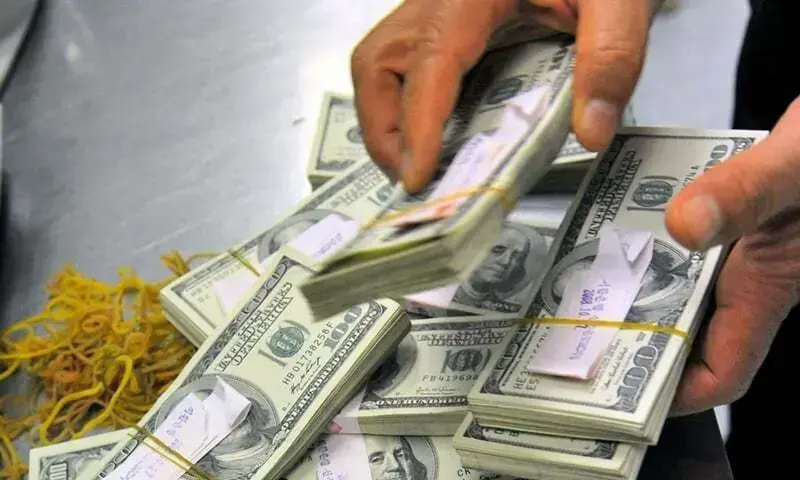
Pakistan is experiencing a sharp decline in unofficial foreign exchange inflows, primarily through the informal hundi and hawala networks, due to the prolonged Gulf war. This conflict has significantly disrupted Dubai's informal trading business, a crucial channel for small exporters and manufacturers who previously sent goods not on official lists to the UAE. These "khapiya" traders facilitated hundreds of millions of dollars in business, which then flowed into Pakistan through these informal means. A manufacturer noted that their export of embroidery products to Dubai has ceased, with their factory now producing only 10% of last year's output for the domestic market. Currency dealers confirm that while the hundi and hawala system has always existed, the Gulf war has further diminished these dollar inflows. Compounding these issues, billions of dollars are reportedly being diverted from the local market into cryptocurrency investments. Individuals involved in crypto trading are offering rates significantly higher than the official market, indicating a substantial outflow. Malik Bostan, chairman of the Exchange Companies Association of Pakistan, stated that sales of dollars to banks by exchange companies dropped from approximately $4 billion in the first 10 months of 2025 to $3 billion in the same period of 2026, with these missing dollars largely attributed to cryptocurrency investments. While the State Bank of Pakistan is working to curb dollar outflows and develop a regulatory framework for crypto, it recently lifted an eight-year ban on crypto-related banking activity in mid-April 2026, allowing regulated banks to open accounts for licensed virtual asset providers under the Virtual Assets Act 2026. However, banks are prohibited from using their own capital or customer deposits for digital asset trading.
The confluence of geopolitical instability and evolving financial technologies presents a dual challenge to Pakistan's foreign exchange stability. The disruption of traditional informal remittance channels, like hundi and hawala, due to regional conflicts highlights the fragility of these systems and their dependence on stable international trade routes. Simultaneously, the significant capital flight into cryptocurrencies, facilitated by regulatory shifts and arbitrage opportunities, indicates a growing distrust in traditional financial markets or a search for higher yields. The State Bank of Pakistan's efforts to regulate crypto while curbing outflows represent a complex balancing act. Future policy must consider how to integrate nascent digital asset markets productively, potentially capturing some of this capital for domestic investment, while mitigating risks to financial stability and preventing illicit flows. The long-term viability of Pakistan's economy may depend on its ability to foster both secure traditional remittance channels and a well-regulated, innovative digital finance ecosystem.
AI-generated to prompt reflection — not editorial opinion, not advice, not a statement of fact. How this works.