Gwadar Port Solidifies Role as Key Trade Gateway Amidst Regional Tensions
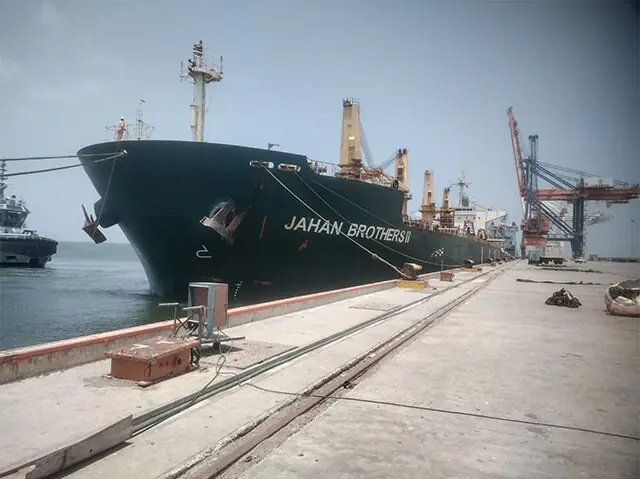
Gwadar Port in Pakistan continues to operate commercially without interruption, despite ongoing regional maritime tensions, signaling increasing international trust in the facility. A Bangladesh-flagged vessel, the M/V Jahan Brothers II, arrived at the port on Saturday, July 19th, 2026, after departing from Singapore. The ship is carrying a significant shipment of 53,064.660 tonnes of prime steel billets. This cargo is bound for Al Hamriyah Port in the United Arab Emirates. The steel billets will be temporarily unloaded and stored at Gwadar Port before being transferred to another vessel for the final leg of its journey to the UAE. This operation is part of a transhipment process. Gwadar Port Authority Chairman Noor-ul-Haq Baloch highlighted that the consistent port activities, even amidst regional challenges, signify Gwadar's emergence as a secure, dependable, and effective regional trade hub. He further emphasized that the port is increasingly recognized as a viable alternative trade route for commerce within the region.
The successful transhipment of steel billets through Gwadar Port, as evidenced by the arrival of the M/V Jahan Brothers II, demonstrates the port's growing logistical capabilities and its strategic positioning. Despite geopolitical complexities in the maritime region, the port's continued commercial operations suggest a functional resilience that could attract further trade volume. This event underscores the evolving dynamics of regional trade routes, where Gwadar is being positioned as a potentially more efficient or secure alternative. The sustained activity highlights the interplay between infrastructure development, international trade confidence, and the management of geopolitical risks in establishing new commercial hubs. Future developments will likely depend on the port's ability to consistently manage operational efficiency and security, thereby solidifying its role in global supply chains.
AI-generated to prompt reflection — not editorial opinion, not advice, not a statement of fact. How this works.