Hacker Simulator: A Fun, Matrix-Inspired Keyboard Masher
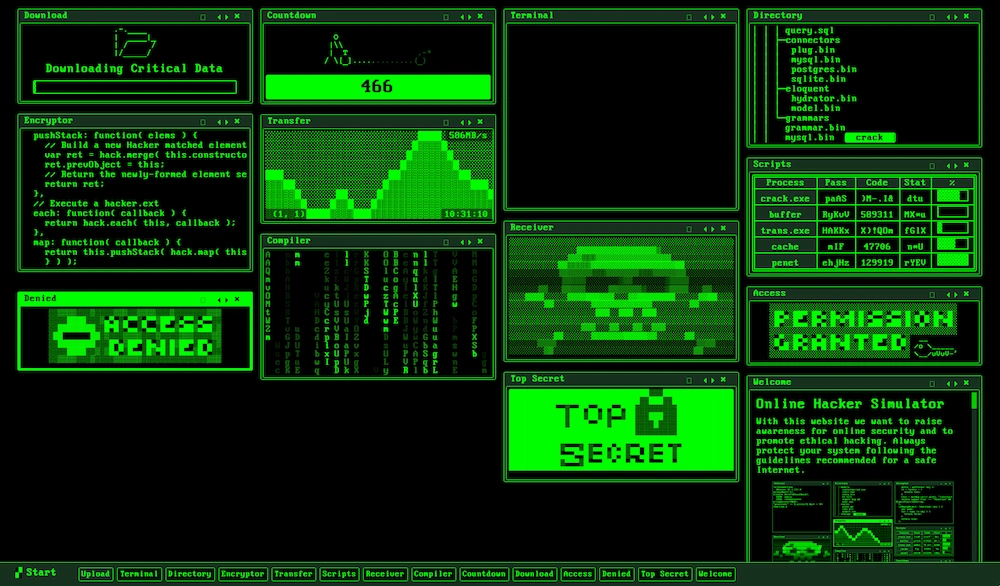
A humorous application, dubbed 'Hacker Simulator,' offers a playful take on hacking aesthetics, mimicking the visual style of iconic hacker scenes. This simulator features multiple windows with 'hacker-like' titles, predominantly in green phosphor, though customizable to other colors. Users can manipulate these windows, simulate typing with perfectly formatted code appearing regardless of input, and toggle various options. The interface includes features like a compiler that appears to be regenerating the Matrix, an infinite directory listing, and a perpetually incomplete download progress bar. Users can adjust colors, fonts, window sizes, and speed via the 'Start' button. Full-screen mode is recommended to mask the underlying operating system, such as macOS. This simulator shares similarities with Pranx's 'Online Hacker Simulator,' which presents a similar concept primarily in green phosphor. Both applications may have inspired each other, as they mutually link. While the windows do not perform actual functions, they allow for simulated typing with random outcomes. Resizable windows contribute to the illusion of engaging in serious hacking. Pressing numeric keys 1 through 9 triggers various unpredictable 'actions,' with key 4 initiating a self-destruct sequence. The experience evokes the 'Hackerman' character from 'Kung Fury,' and is reminiscent of other tools like 'Hacker Typer,' which demonstrates rapid typing often seen in movie hacking scenes.
This 'Hacker Simulator' leverages a popular cultural trope – the visually dramatic, albeit often unrealistic, depiction of hacking in media like 'The Matrix' and 'Kung Fury.' By simulating the aesthetic without functional complexity, it caters to a desire for engagement with technological themes in a lighthearted, non-technical manner. The application's design, including its customizable interface and 'random' outputs, prioritizes user amusement over technical accuracy. This approach highlights a societal fascination with the mystique of hacking, allowing individuals to playfully interact with a symbolic representation of digital intrusion and expertise. In the context of evolving digital literacy, such tools can serve as an accessible entry point for curiosity, while also underscoring the significant gap between cinematic portrayals and the intricate realities of cybersecurity.
AI-generated to prompt reflection — not editorial opinion, not advice, not a statement of fact. How this works.