Hailstorm blankets streets in Ponta Porã, surprising residents
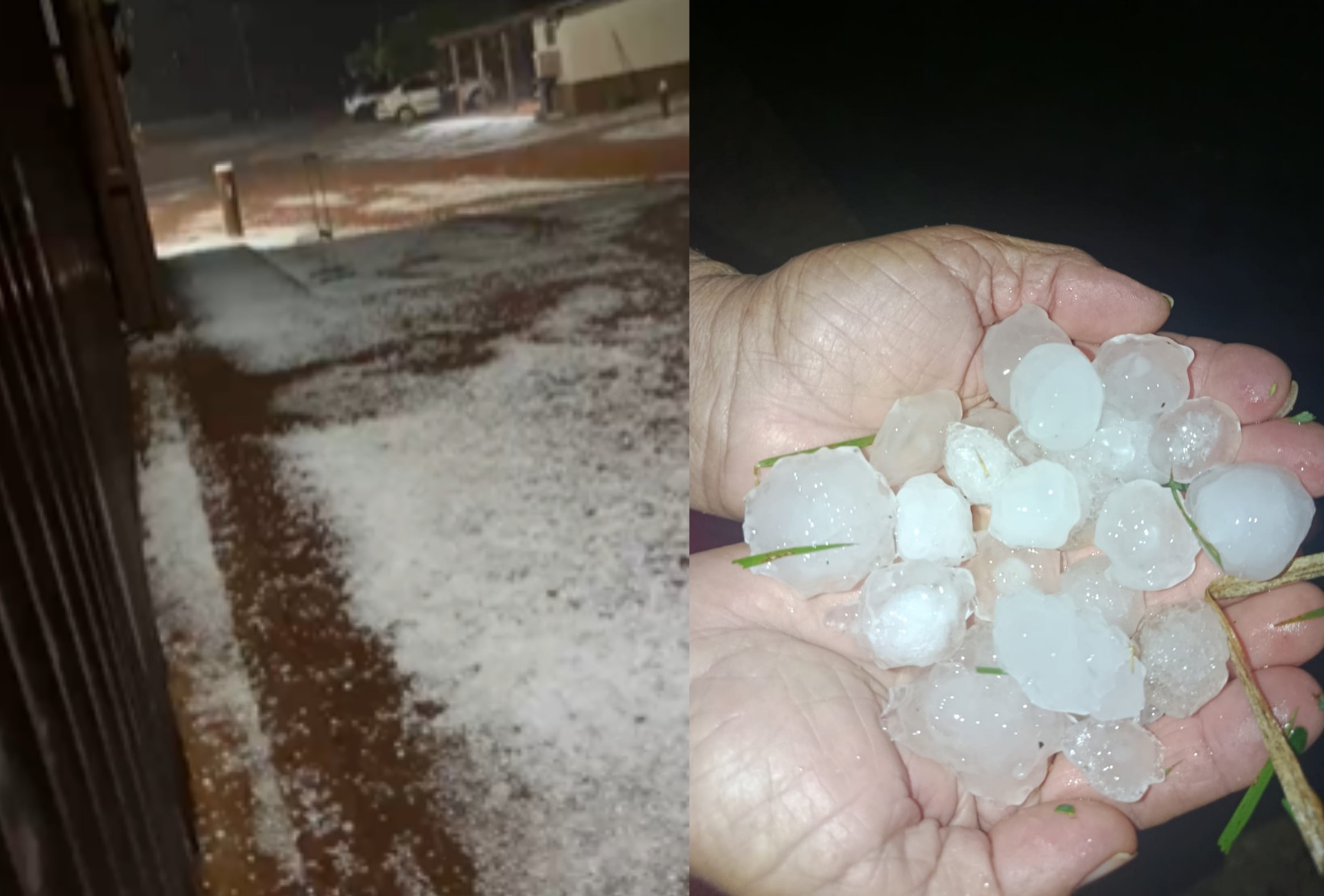
A severe thunderstorm brought a surprising hailstorm to the Nova Itamarati district of Ponta Porã, Mato Grosso do Sul, between Wednesday night (May 29) and Thursday morning (May 30). Despite the dramatic accumulation of ice stones, which covered streets and gave the impression of snow, no damage, displaced families, or injuries have been reported. The hail was not uniform across the district, with the phenomenon being more intense near the Association of Residents and Employees of Fazenda Itamarati (AMFFI). Civil Defense has been in contact with local representatives and has not identified any damages thus far. A resident reported the hail began around 7 PM and lasted for approximately 35 minutes, with her home and neighboring residences appearing to have sustained no damage, though a full assessment awaits daylight. Interestingly, despite the significant hailstorm, Ponta Porã recorded only 0.2 millimeters of rain in the 24 hours leading up to Thursday, according to the National Center for Monitoring and Alerts of Natural Disasters (Cemaden). This contrasts sharply with other cities in the state, such as Bataguassu (28.2 mm), Itaquiraí (12 mm), and Maracaju (9.2 mm), highlighting the varied nature of the storm across Mato Grosso do Sul.
This event highlights the localized and often unpredictable nature of severe weather phenomena, particularly hailstorms, which can occur even in areas experiencing low overall rainfall. The contrast between the visual impact of the hail and the minimal recorded precipitation in Ponta Porã suggests a storm cell with strong updrafts capable of forming large hailstones, but with limited moisture for sustained rainfall. From a meteorological perspective, understanding the atmospheric conditions that lead to such localized, intense hailstorms is crucial for improving forecasting and early warning systems. For residents, the experience underscores the importance of preparedness for extreme weather events, even when they appear atypical. Future climate modeling may offer insights into potential shifts in the frequency or intensity of such localized severe weather events.
AI-generated to prompt reflection — not editorial opinion, not advice, not a statement of fact. How this works.