Haitian Baccalaureate Exam Enters New Era, Spanning Over a Century of Evolution
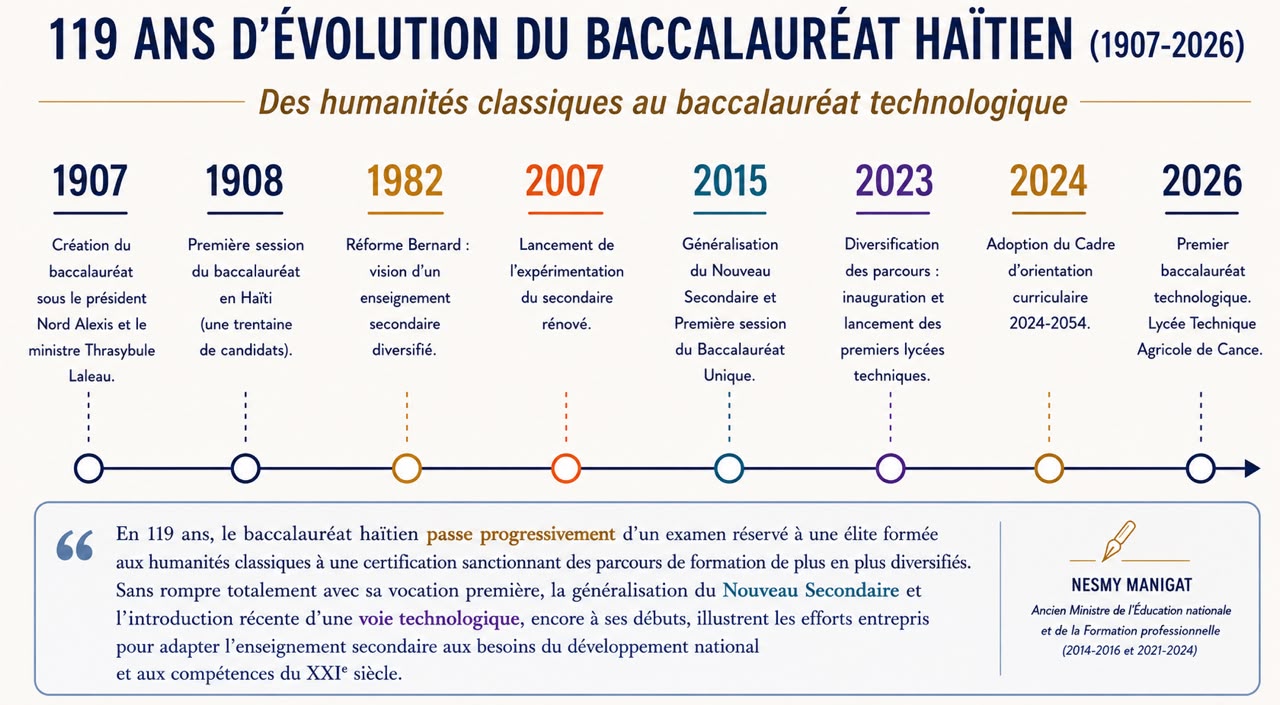
The Haitian Baccalaureate examination, a pivotal academic milestone, is poised to enter its "second era" in 2026, marking a significant transition after more than a century of its current format. Established in 1907, the examination has been a cornerstone of secondary education in Haiti for over 119 years. This upcoming shift signifies a major reform, reflecting the need to adapt educational standards and assessment methods to contemporary challenges and future demands. The transition from its "first era" to its "second era" suggests a comprehensive reevaluation of the exam's structure, content, and objectives. Details regarding the specific changes or the nature of this "second era" are anticipated to be elaborated upon in subsequent parts of this discussion. The current format, which has served the nation for generations, will be succeeded by a new framework designed to better prepare students for higher education and the evolving job market. This reform is a critical step in modernizing Haiti's educational system.
The impending transformation of the Haitian Baccalaureate exam from its century-old framework to a new "second era" in 2026 highlights a critical juncture for the nation's educational system. Such reforms are often driven by the necessity to align academic outcomes with the demands of a rapidly changing global landscape, particularly in the context of technological advancement and economic development. The longevity of the current exam format underscores a potential inertia within educational institutions, while its impending overhaul signals a proactive response to ensure future generations are equipped with relevant skills. This transition presents an opportunity to critically assess pedagogical approaches and assessment methodologies, aiming to foster critical thinking and adaptability rather than rote memorization. The success of this "second era" will likely depend on robust implementation, adequate resources, and continuous evaluation to ensure it effectively serves the evolving needs of Haitian students and society.
AI-generated to prompt reflection — not editorial opinion, not advice, not a statement of fact. How this works.