Half of BJP members ready to contest on our tickets, claims Samajwadi Party leader
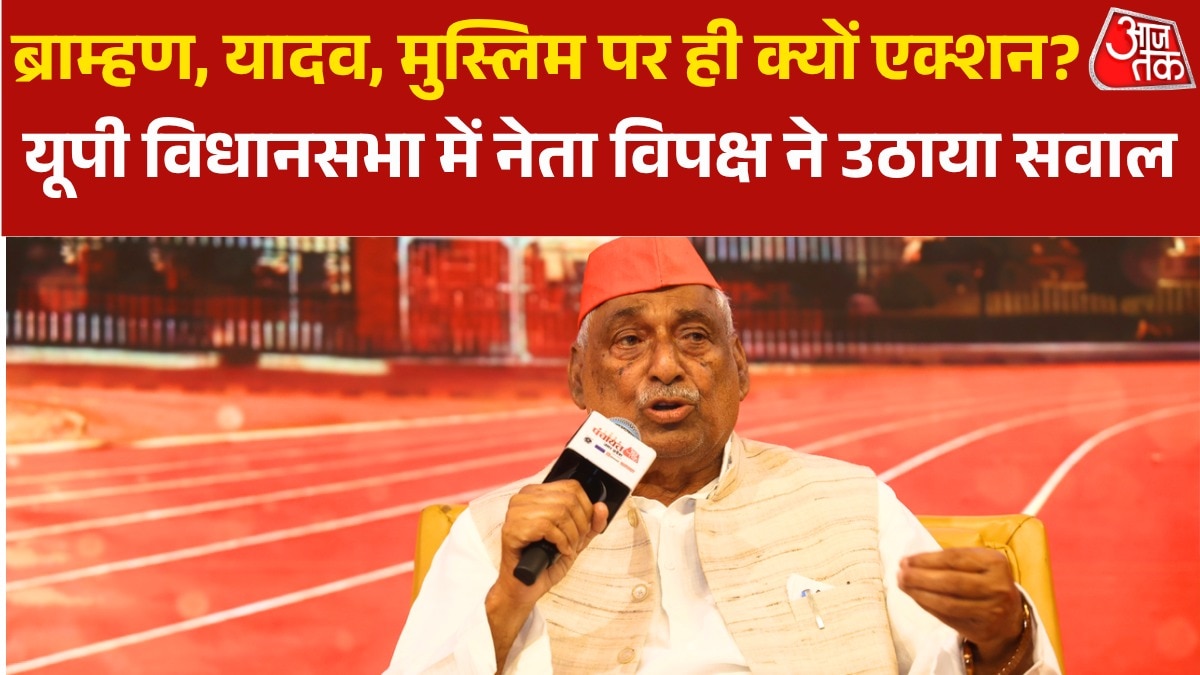
In Lucknow, during a special invitation to the 'Panchayat Aajtak' program organized by Aajtak, the Leader of Opposition in the Uttar Pradesh Legislative Assembly, Mata Prasad Pandey, made a significant claim. Speaking on a session titled 'Will Win the Power Race on a Cycle', Pandey stated that a substantial portion of the Bharatiya Janata Party (BJP) members are prepared to contest elections under the Samajwadi Party's banner if the party is willing. This assertion suggests a potential internal dissatisfaction or strategic maneuvering within the ruling party, according to Pandey's perspective. The statement was made in a public forum, indicating a deliberate attempt to influence public perception and political discourse in Uttar Pradesh. The Samajwadi Party leader's claim implies a belief in his party's strength and appeal, even among opponents. The context of the statement was a political discussion program, highlighting the ongoing political competition in the state. The specific number of BJP members willing to switch was not quantified, but the phrase 'half of the people' suggests a significant proportion. This statement could be interpreted as a tactic to demoralize the opposition and bolster the Samajwadi Party's image ahead of future electoral contests.
This statement from a prominent opposition leader highlights the dynamic and often fluid nature of political alliances and loyalties. The claim, if substantiated, points to potential internal divisions or strategic calculations within the ruling party, driven by factors such as electoral prospects, policy disagreements, or leadership challenges. From a governance perspective, such fluidity can indicate a healthy, albeit turbulent, democratic process where parties continuously assess their positions and seek advantageous alignments. However, it also raises questions about party discipline and ideological consistency. In the context of the evolving political landscape, particularly with the increasing influence of data analytics and targeted campaigning, parties may find themselves strategically reassessing their candidate selection and coalition-building efforts. The long-term implication could be a greater emphasis on pragmatic electoral politics over strict ideological adherence, shaping the future trajectory of party platforms and voter engagement strategies in the coming decade.
AI-generated to prompt reflection — not editorial opinion, not advice, not a statement of fact. How this works.