Hamas Dissolves Gaza Governing Body, Paving Way for New Administration
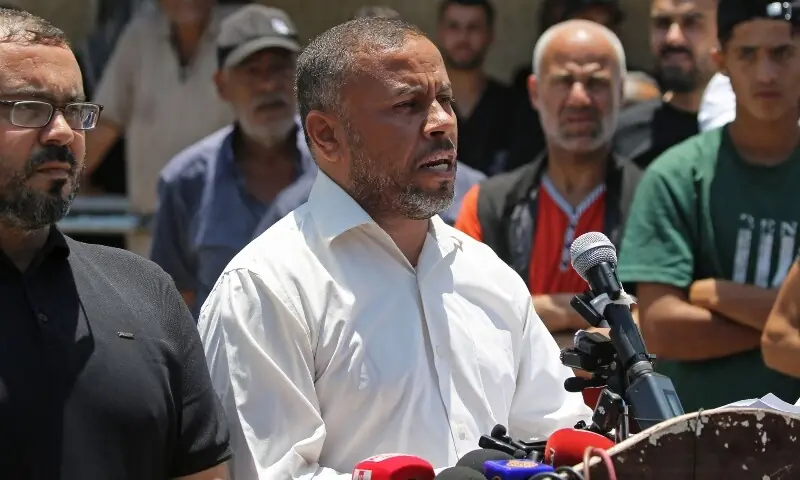
The Palestinian group Hamas announced on Monday the dissolution of its governing body in the Gaza Strip, a move intended to facilitate the transition to a new technocratic committee for civilian rule. Hamas has governed Gaza since 2007, following its victory in legislative elections the previous year and subsequent seizure of control from Fatah. This decision follows repeated statements by Hamas indicating a willingness to step aside from daily governance, though the issue of its disarmament remains a significant obstacle.
Mohammed al-Farra, head of Hamas's emergency committee, officially submitted his resignation and dissolved the committee to enable the administrative and governmental transition to the National Committee for the Administration of Gaza (NCAG). The NCAG was established by the Board of Peace, an initiative by former US President Donald Trump related to a ceasefire brokered in October 2025. Hamas stated this move aims to remove pretexts for Israeli aggression and expressed readiness to hand over responsibilities to the NCAG.
Palestinian factions reportedly welcomed Hamas's decision during a meeting in Cairo, viewing it as a serious step toward enabling the NCAG, headed by technocrat Ali Shaath, to assume its governing role. The NCAG has been operating from outside Gaza, reportedly due to Israeli objections. Negotiations involving Hamas, other factions, and mediators in Cairo have focused on the second phase of a Gaza ceasefire, which includes Hamas's disarmament and Israeli troop withdrawal, a process stalled for months. Hamas insists on the establishment of a Palestinian administration before considering disarmament, while Israel opposes Hamas's return to power and a direct Palestinian Authority takeover at this stage.
Hamas's dissolution of its Gaza governing body represents a strategic maneuver within a complex geopolitical landscape. The stated aim of removing Israeli pretexts for continued military action highlights the group's efforts to reframe its position and potentially garner international support or alleviate pressure. However, the efficacy of this move hinges on the practical implementation of the NCAG and the resolution of deeply entrenched issues, particularly Hamas's disarmament and Israel's security concerns. The creation of a technocratic committee, while seemingly a step towards broader governance, does not inherently resolve the fundamental conflict over political control and security arrangements in Gaza. The differing objectives of Hamas, Israel, and the Palestinian Authority, alongside the stalled ceasefire negotiations, indicate that this administrative shift is unlikely to lead to immediate stability or a resolution to the broader conflict. The long-term implications will depend on the NCAG's ability to govern effectively, the international community's engagement, and whether this administrative change can be a catalyst for addressing the core political and security disputes.
AI-generated to prompt reflection — not editorial opinion, not advice, not a statement of fact. How this works.