Handedness Determined by Practice, Not Brain Structure, Study Finds
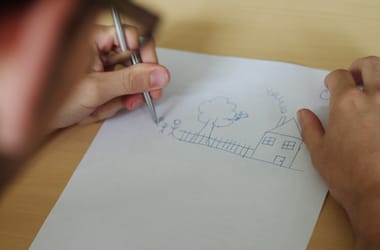
American researchers have demonstrated through a remarkably simple experiment that hand dominance is a matter of practice rather than an inherent trait linked to brain structure. The study effectively debunks the long-held notion that an individual's dominant hand is predetermined by their brain's organization. This groundbreaking research suggests that the preference for using one hand over the other can be cultivated and changed through consistent effort and repetition. The findings imply that societal norms and early childhood training may play a more significant role in shaping handedness than previously understood. This could have implications for fields ranging from developmental psychology to neuroscience, potentially altering our understanding of motor skill development and brain plasticity. The experiment's simplicity underscores the power of observational research in challenging established scientific beliefs. Further investigation may explore the extent to which handedness can be modified in adults and the potential benefits or drawbacks of such changes.
This research challenges conventional understandings of handedness, suggesting that environmental factors and learned behaviors, rather than innate neurological predispositions, are the primary drivers of hand preference. The study's findings highlight the significant influence of practice and repetition in shaping motor skills, a principle applicable across various domains of human development and learning. In the context of an increasingly technologically driven world, understanding the plasticity of human capabilities, like handedness, could inform the design of adaptive interfaces and training programs. This perspective encourages a re-evaluation of how we approach skill acquisition and the potential for individuals to overcome perceived limitations through dedicated practice, fostering a more dynamic view of human potential.
AI-generated to prompt reflection — not editorial opinion, not advice, not a statement of fact. How this works.