Harrie Jekkers Honored with Miniature Statue at Madurodam
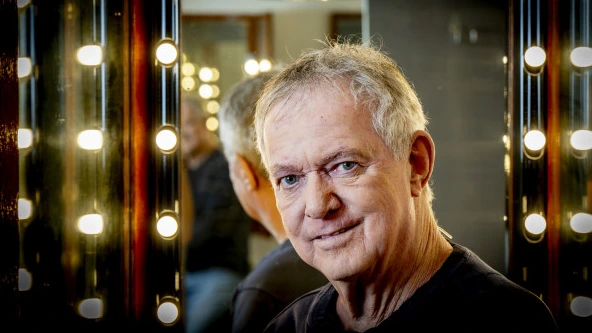
Dutch singer, comedian, and writer Harrie Jekkers will be commemorated with a miniature statue at the Madurodam model town in The Hague. Jekkers, aged 75 and widely recognized for his hit song 'O, o, Den Haag,' announced his retirement from performing last year. His final performance is scheduled for this Sunday at the Koninklijke Schouwburg in The Hague, where he has performed almost every Sunday afternoon since 2018. The miniature statue will be presented by theater doorman Ruub Petow and sculptor Mitchell Duivesteijn on Saturday, following Jekkers' second-to-last show. This new monument will be permanently situated in Madurodam's Harrie Jekkersplein, in front of the model of the Koninklijke Schouwburg. Jekkers, born in The Hague's Schilderswijk in 1951, shares a birth year with the year before Madurodam's opening on July 2, 1952. This placement unites two significant symbols of The Hague in miniature form. Jekkers first gained prominence as the founder of the pop group Klein Orkest in 1978, known for hits like 'Over de muur.' After the group disbanded in 1985, he shifted his focus to cabaret. His solo hit 'O, o, Den Haag' in 1982, performed under the pseudonym Harry Klorkestein, further cemented his fame. Throughout his career, Jekkers has received multiple accolades, including the Annie M.G. Schmidt Prize in 1991 for his song 'Terug bij af' and the Nationale Cabaretprijs in 1993 for his show 'Met een goudvis naar zee.' Following a nearly 15-year hiatus from theater between 2001 and 2015, Jekkers returned to the stage, performing both solo and with his friend Jeroen van Merwijk, and also embarked on a reunion tour with Klein Orkest.
The recognition of Harrie Jekkers with a miniature statue at Madurodam highlights the enduring cultural impact of artists who deeply resonate with local identity and national sentiment. This gesture, placing his likeness alongside iconic Dutch landmarks, signifies a successful integration of artistic contribution into the nation's collective memory. The timing, coinciding with his retirement, marks a moment of public appreciation for a career spanning decades and multiple artistic disciplines, from music to comedy. Such tributes often reflect a societal value placed on cultural heritage and the individuals who shape it, potentially influencing future generations of artists and audiences to engage with and preserve Dutch cultural narratives. The placement within Madurodam, a site dedicated to showcasing Dutch achievements, suggests a broader acknowledgment of Jekkers' role in contributing to the nation's cultural landscape.
AI-generated to prompt reflection — not editorial opinion, not advice, not a statement of fact. How this works.