Has Trump Redefined the Limits of US Presidential Power?
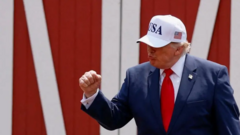
As Donald Trump approaches the latter half of his second potential presidential term, he recently stated in an interview that "my power has no limits." This assertion stands in contrast to what is known in American political discourse as the "American experiment." This experiment began 250 years ago with the declaration of independence from the dominion of the British monarchy. The implication of Trump's statement suggests a potential shift in the established understanding of executive authority within the United States.
The assertion of unlimited presidential power challenges the foundational principles of American governance, which are built upon a system of checks and balances designed to prevent the concentration of authority. Historically, the "American experiment" has evolved through a dynamic tension between executive action and constitutional constraints. Examining such claims requires an understanding of the historical precedents and legal frameworks that define presidential powers. Future presidencies will likely grapple with the implications of this discourse, potentially leading to renewed debates on the separation of powers and the role of the judiciary in interpreting executive authority in the context of evolving political norms and technological advancements.
AI-generated to prompt reflection — not editorial opinion, not advice, not a statement of fact. How this works.