Hawaii's Kīlauea volcano erupts with a 300-meter lava fountain
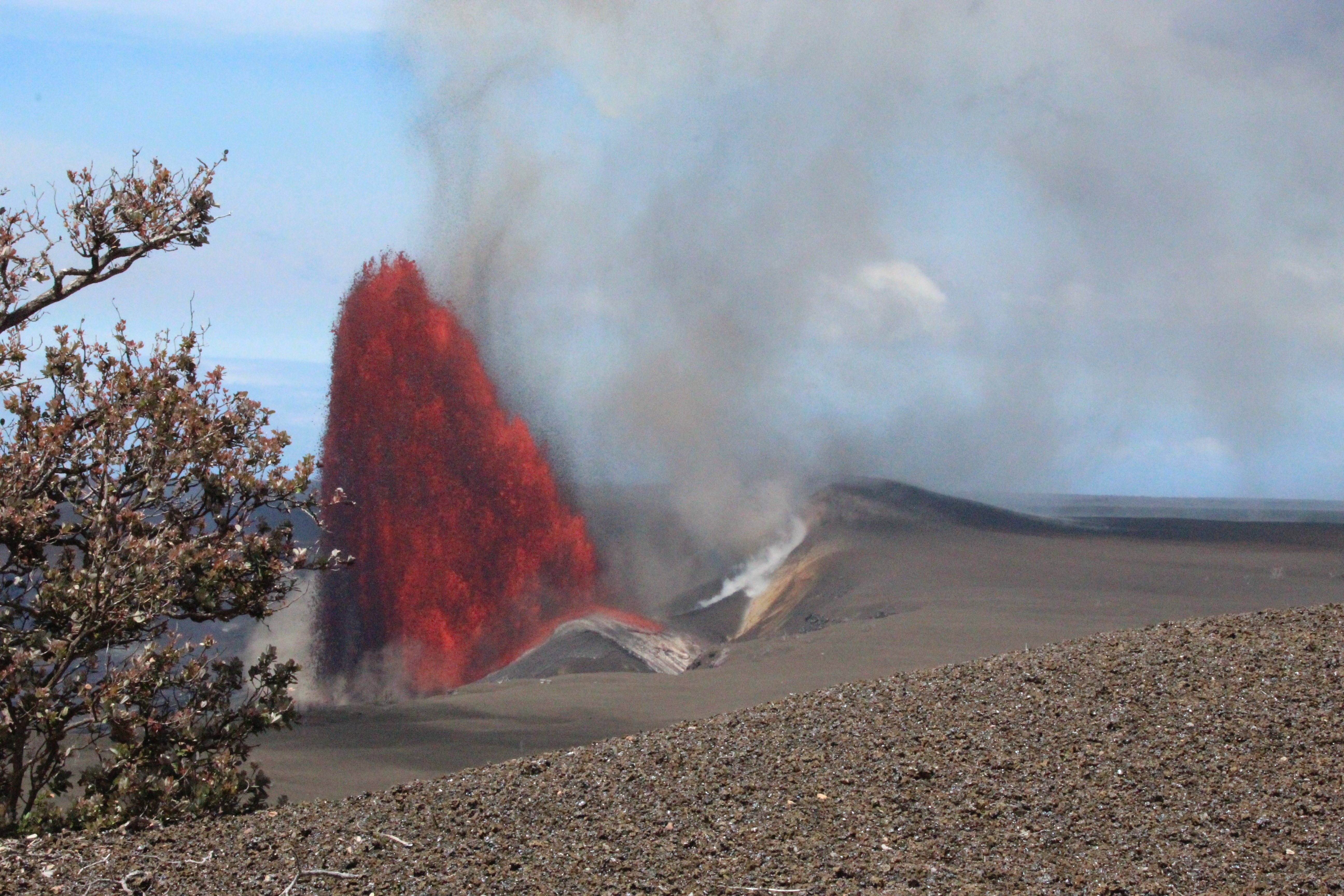
A video circulating on social media since June 27, 2026, shows a massive lava fountain erupting from Hawaii's Kīlauea volcano. The footage, captured from an elevated viewpoint, depicts a towering column of lava surrounded by smoke and ash, with numerous onlookers observing from a distance. The event, verified as factual by "Fato ou Fake," occurred in the Halema'uma'u crater and lasted approximately seven hours. This specific eruption produced a lava fountain reaching an impressive 300 meters in height at its peak. The video was originally posted by visual artist Nick Petelos, who regularly documents eruptions at Kīlauea and shared the footage on June 28, 2026, describing it as the 50th episode of summit lava fountains. The Hawaiian Volcano Observatory, part of the U.S. Geological Survey, confirmed that the images appear to be genuine recordings of this event. Geologist Adriana Alves explained that such lava fountains are less common in Hawaii due to the magma's low viscosity, which typically results in slower-moving lava flows. However, in rare instances, gases trapped within the magma fail to escape before reaching the surface, leading to a rapid expansion and an explosive, fountain-like eruption. Alves likened this phenomenon to opening a shaken bottle of soda, where a sudden pressure release causes a dramatic expulsion of gas and liquid.
The viral video captures a dramatic natural event, the Kīlauea volcano's lava fountain, confirming its authenticity. While visually stunning, such eruptions highlight the dynamic geological forces at play. The rarity of these high fountains, as explained by experts, is tied to specific conditions of magma pressure and gas release, illustrating the complex interplay of factors governing volcanic activity. Understanding these mechanisms is crucial for accurate risk assessment and public safety advisories in volcanically active regions. The event serves as a reminder of Earth's powerful geological processes and the importance of scientific monitoring and public education in managing potential hazards.
AI-generated to prompt reflection — not editorial opinion, not advice, not a statement of fact. How this works.