Hayabusa2 Captures Images of Asteroid 'Triton' During High-Speed Flyby
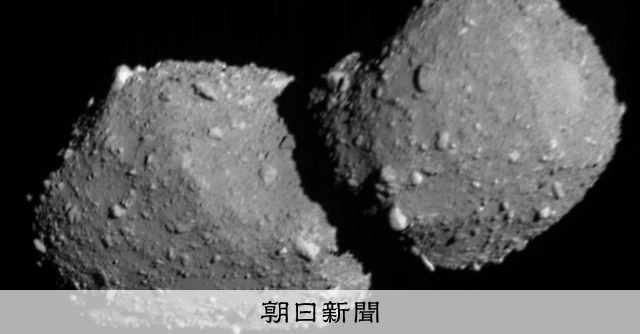
Japan's Hayabusa2 spacecraft has successfully captured images of the asteroid 'Triton' (1999 JU3) during a high-speed flyby. The mission achieved a close encounter with the celestial body, gathering valuable data. This maneuver was part of Hayabusa2's ongoing exploration of near-Earth asteroids. The spacecraft is designed to study the composition and evolution of these objects, providing insights into the early solar system. The successful flyby demonstrates the advanced capabilities of the Hayabusa2 mission and its sophisticated navigation systems. The images and data collected are expected to contribute significantly to our understanding of asteroid formation and dynamics. This mission follows the success of its predecessor, Hayabusa, which returned samples from the asteroid Itokawa.
The successful high-speed flyby of asteroid 'Triton' by Hayabusa2 highlights the increasing precision and capability of deep-space exploration missions. Such maneuvers, while scientifically valuable for data acquisition, inherently involve elevated risk due to the speed and proximity required. Future mission planning may need to balance the scientific return of aggressive flybys against the potential for mission-ending anomalies. This event underscores the ongoing global investment in understanding near-Earth objects, which has implications for planetary defense and resource utilization strategies in the coming decades.
AI-generated to prompt reflection — not editorial opinion, not advice, not a statement of fact. How this works.