Health Minister Criticizes Economic Claims, Cites Empty Refrigerators
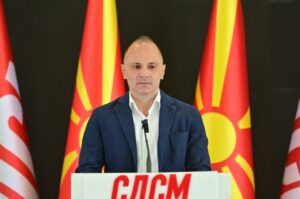
Venco Filipche, President of SDSM, stated at a press conference that the economic reality faced by citizens is the strongest refutation of claims made by Hristijan Mickoski regarding North Macedonia being the third-largest economy in Europe. Filipche asserted that the Prime Minister's primary activity is storytelling, a skill he possesses but which does not reflect the citizens' lived experiences. The minister used the metaphor of "empty refrigerators" to illustrate the perceived disconnect between official narratives and the populace's financial situation. He implied that these empty refrigerators serve as tangible evidence contradicting optimistic economic pronouncements. The statement suggests a significant gap between political rhetoric and the everyday economic struggles of the people. Filipche's remarks aim to highlight what he views as a misleading portrayal of the national economy by the current leadership. The core of his argument rests on the tangible, everyday experiences of citizens as a more accurate measure of economic health than government claims.
This statement highlights a common political tactic of contrasting abstract economic indicators with tangible, everyday experiences. The metaphor of "empty refrigerators" serves as a powerful, albeit anecdotal, counterpoint to potentially optimistic official economic narratives. Such framing can be effective in mobilizing public sentiment by appealing to relatable concerns about household budgets and cost of living. From a systems perspective, this dynamic underscores the challenge for governments in aligning macroeconomic policies with microeconomic realities experienced by citizens. Effective governance requires not only sound economic management but also transparent communication that acknowledges and addresses the lived financial pressures faced by the population, especially in the context of global economic volatility and inflationary trends.
AI-generated to prompt reflection — not editorial opinion, not advice, not a statement of fact. How this works.