Health Minister: No discharge for dengue patients until fully recovered
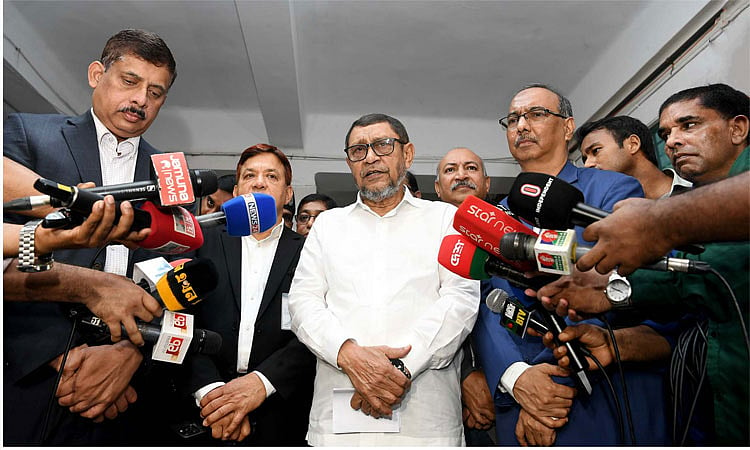
Bangladesh's Health and Family Welfare Minister, Sardar Md. Sakhawat Hossain, has directed that dengue patients should not be discharged from hospitals until they are fully recovered, even if their fever subsides. He made these remarks on Thursday at Dhaka Medical College during an event to hand over microscopes and laboratory equipment to the pathology department. The minister highlighted the government's ongoing two-month nationwide cleanliness campaign to eliminate Aedes mosquito larvae and the introduction of treatment protocols for physicians. He also announced plans to procure a special medical tablet for destroying larvae in stagnant water sources like coconut shells and tires, which will rapidly eliminate them. To address critical cases, a daily treatment protocol developed by specialist physicians is being distributed to all doctors via mobile phones and the website, emphasizing the danger of plasma leakage in dengue patients. The minister also stated that the medical curriculum will be modernized to align with global standards, noting that the pathology department at Dhaka Medical College had lagged behind for 17 years, with a government microscope being out of order for three years without replacement. The newly handed-over, latest model microscopes will enable accurate cancer diagnosis in a single sitting, marking a significant advancement in healthcare services. The event was attended by Health Secretary Kamruzzaman Chowdhury, Director General of the Directorate General of Health Services Prof. Dr. Probhat Chandra Biswas, and other senior officials.
The directive to keep dengue patients hospitalized until full recovery, coupled with the introduction of new technologies and treatment protocols, reflects a proactive public health response to a persistent vector-borne disease. The emphasis on advanced diagnostic equipment like modern microscopes for pathology underscores a systemic effort to improve healthcare infrastructure and diagnostic accuracy, crucial for managing complex conditions like cancer and infectious diseases. This initiative aims to enhance patient outcomes by ensuring comprehensive care and precise diagnosis, thereby potentially reducing mortality rates and improving the overall efficiency of the healthcare system. The modernization of the medical curriculum and infrastructure suggests a long-term vision for elevating medical education and practice to international standards, addressing past deficiencies and preparing for future health challenges.
AI-generated to prompt reflection — not editorial opinion, not advice, not a statement of fact. How this works.