Health Workers' Leave Canceled in Flood-Hit Districts to Ensure Care, Says Health Minister
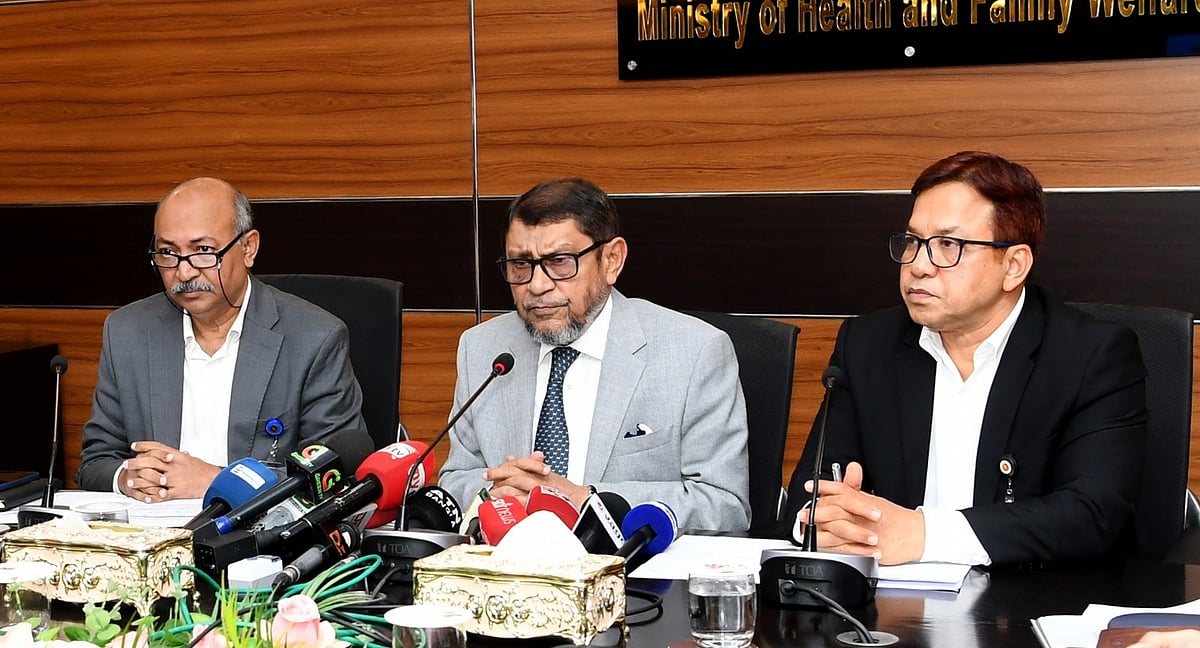
The Bangladeshi government is taking maximum preparations to ensure healthcare services continue for people in 11 flood-affected districts, according to Health Minister Sardar M. Sakhawat Hossain. To guarantee the presence of medical personnel, the leave of health workers in these high-risk districts has been canceled, ensuring they remain on duty in the field. Speaking at a press conference at the Secretariat on Monday, the minister stated that adequate medicines, saline, antivenom, doctors, and health workers have been prepared to prevent any patient from being deprived of treatment. The Directorate General of Health Services is continuously monitoring the situation and has issued directives to the field level. Medical teams have been deployed, and sufficient stocks of medicines, saline, water purification tablets, and antivenom have been ensured to provide emergency healthcare. Senior physicians have been assigned to oversee the health situation in each of the 11 affected districts, including Chittagong, Cox's Bazar, Bandarban, Rangamati, Khagrachhari, Feni, Noakhali, Lakshmipur, Chandpur, Comilla, and Brahmanbaria. The Health Ministry's control room is actively collecting information and coordinating efforts. The Health Secretary, M. Kamruzzaman Chowdhury, reported that 95 snakebite patients have been treated in flood-affected hospitals and have all recovered, with over 1,000 vials of antivenom currently in stock, and an additional 25,000 vials expected soon. To combat waterborne diseases post-flood, water purification tablets are being distributed, and adequate ORS, saline, and medicines are available, along with special medical teams. The Director General of Health Services, Professor Prabhat Chandra Biswas, mentioned that health-related information from flood-affected areas is being gathered and advice provided through the national health service call center (16263) and Health Barta. Dengue and other infectious disease situations are also being closely monitored.
The government's mobilization of healthcare resources, including canceling leave for medical staff and ensuring supplies like antivenom and water purification tablets, demonstrates a proactive response to the public health challenges posed by widespread flooding. This approach aims to mitigate risks such as snakebites and waterborne diseases, which are exacerbated by such natural disasters. The emphasis on maintaining healthcare access in affected regions highlights the critical role of public health infrastructure in disaster management. Looking ahead, the recurring nature of such events suggests a need for sustained investment in resilient healthcare systems and early warning mechanisms, particularly in vulnerable geographical areas. Evaluating the long-term effectiveness of these emergency measures against the backdrop of climate change and increasing disaster frequency will be crucial for future preparedness strategies.
AI-generated to prompt reflection — not editorial opinion, not advice, not a statement of fact. How this works.