Helicopter Collision in Rio: Preliminary Report Cites Shared Flight Plan
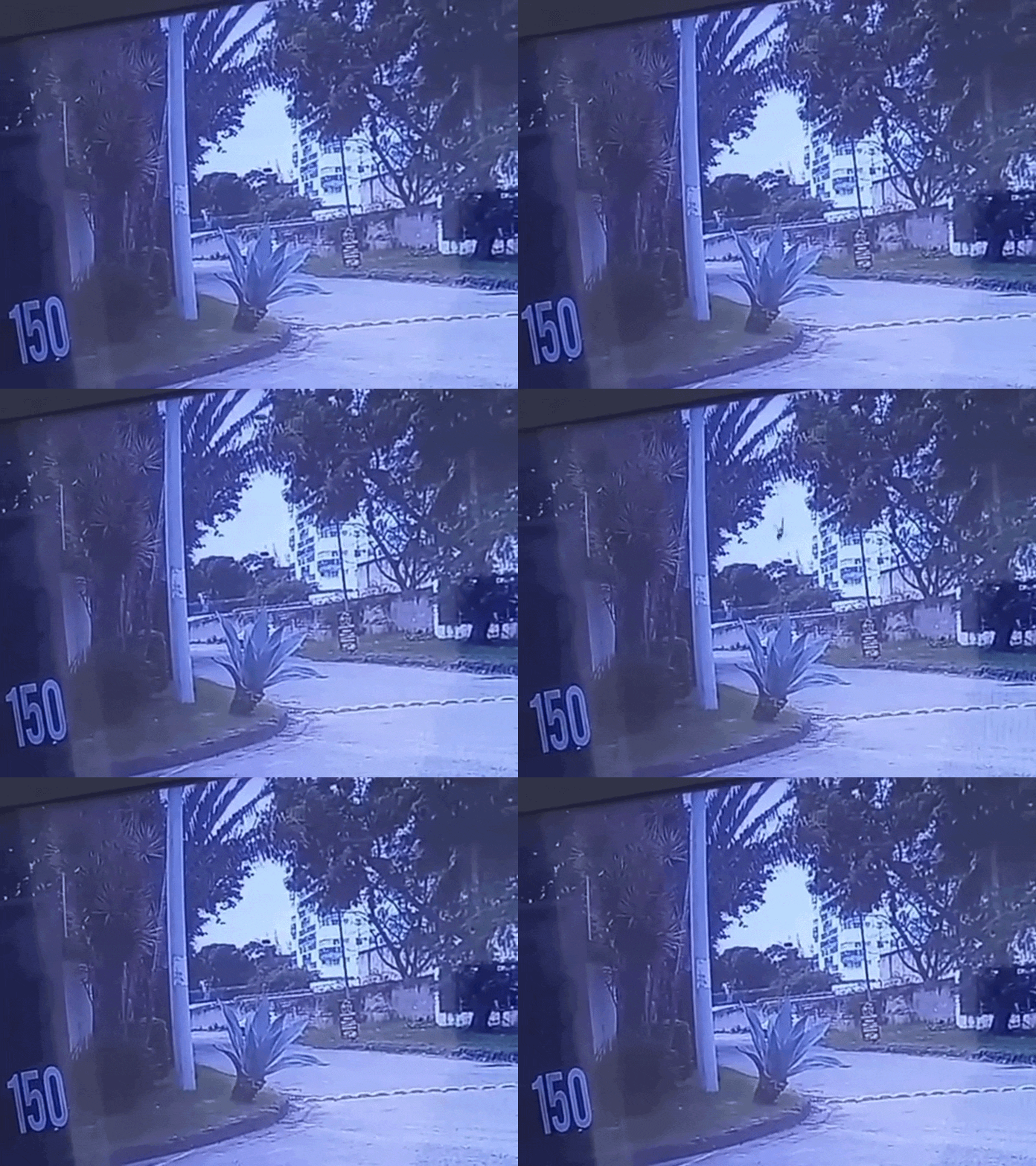
A preliminary report from Brazil's Center for Investigation and Prevention of Aeronautical Accidents (Cenipa) indicates that two helicopters that collided in mid-air on June 14 in Rio de Janeiro's Recreio dos Bandeirantes neighborhood were operating on coincident flight paths. The crash resulted in the deaths of all six individuals on board the two aircraft. Among the victims were American singer Oliver Tree and Argentinian YouTuber Gaspi. The report details that one helicopter, with registration PR-DJJ, departed from Santos Dumont Airport bound for Guaratiba with only pilot Charles Marsillac. The second helicopter, PP-MAC, took off from Jacarepaguá Airport heading to Angra dos Reis, carrying pilot Alexandre Souza and four passengers: Lucas Frota, Gaspar Prim (Gaspi), Oliver Tree, and Lucas Vignale. Both aircraft's flight plans involved using the Special Helicopter Routes (REH) Praia and Grota at overlapping altitudes. Cenipa's findings suggest the planned route for PR-DJJ and the authorized route for PP-MAC were identical from a point known as Tachas, with the collision occurring between Tachas and Piabas within the Grota REH. Notably, the PP-MAC helicopter, carrying Oliver Tree and Gaspi, was not detected by Brazilian Airspace Control System (Sisceab) radars, while the PR-DJJ was tracked until just before the impact. Neither helicopter was equipped with flight data recorders (FDR) or cockpit voice recorders (CVR), though regulatory requirements did not mandate these for the involved aircraft. Weather conditions were favorable for visual flight, with good visibility and light winds reported.
This preliminary report highlights a critical confluence of factors leading to the tragic mid-air collision. The shared flight plan and overlapping routes, particularly within designated Special Helicopter Routes, point to potential systemic issues in air traffic management and communication protocols for general aviation in the region. The absence of radar detection for one of the aircraft raises further questions about surveillance capabilities and transponder operational status. While weather was favorable, the lack of "black box" recorders, though not mandatory, limits the depth of immediate post-accident analysis. Future investigations will likely focus on the decision-making processes of the pilots, the effectiveness of air traffic control oversight for these specific routes, and the regulatory framework governing helicopter operations in densely trafficked airspace. Understanding the incentives and operational pressures that may have led to these flight paths and communication gaps will be crucial for preventing similar incidents.
AI-generated to prompt reflection — not editorial opinion, not advice, not a statement of fact. How this works.